

The Snowy Plover shares the beaches where it nests with the community, but its eggs and chicks face risks constantly. Through monitoring, fencing, exclosures, environmental surveillance, and education, we recorded 30 successful nests and 63 chicks in 2026.
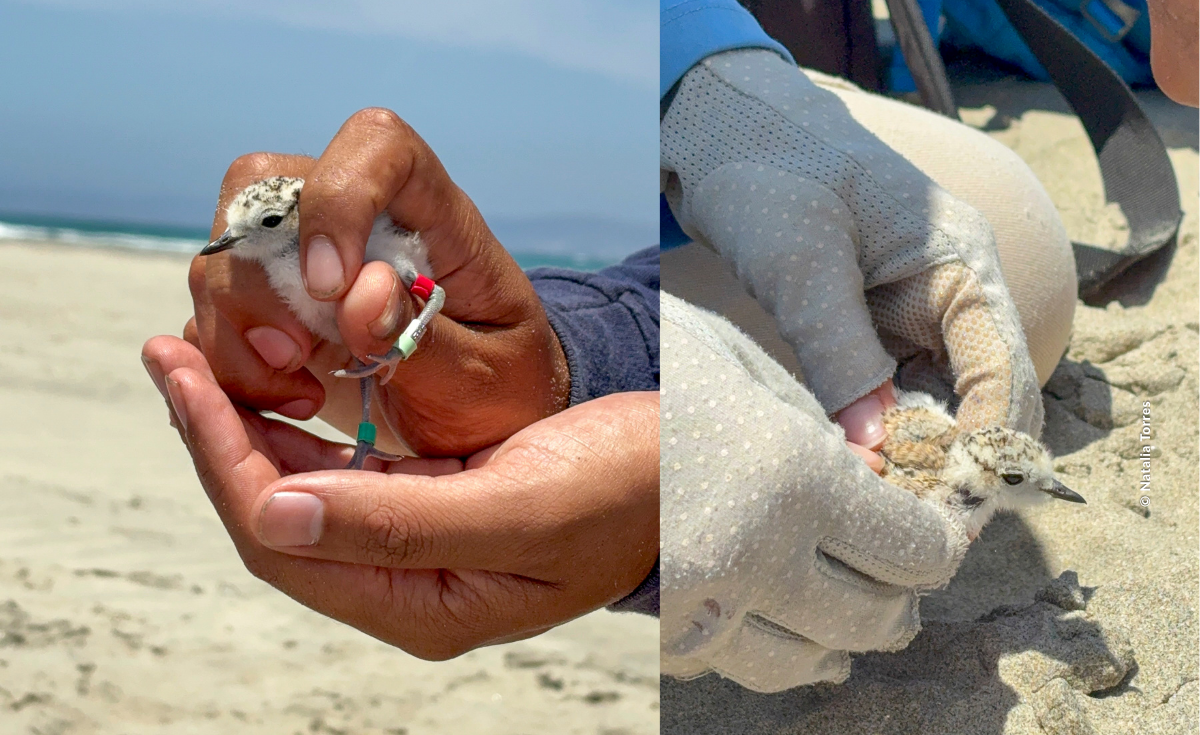
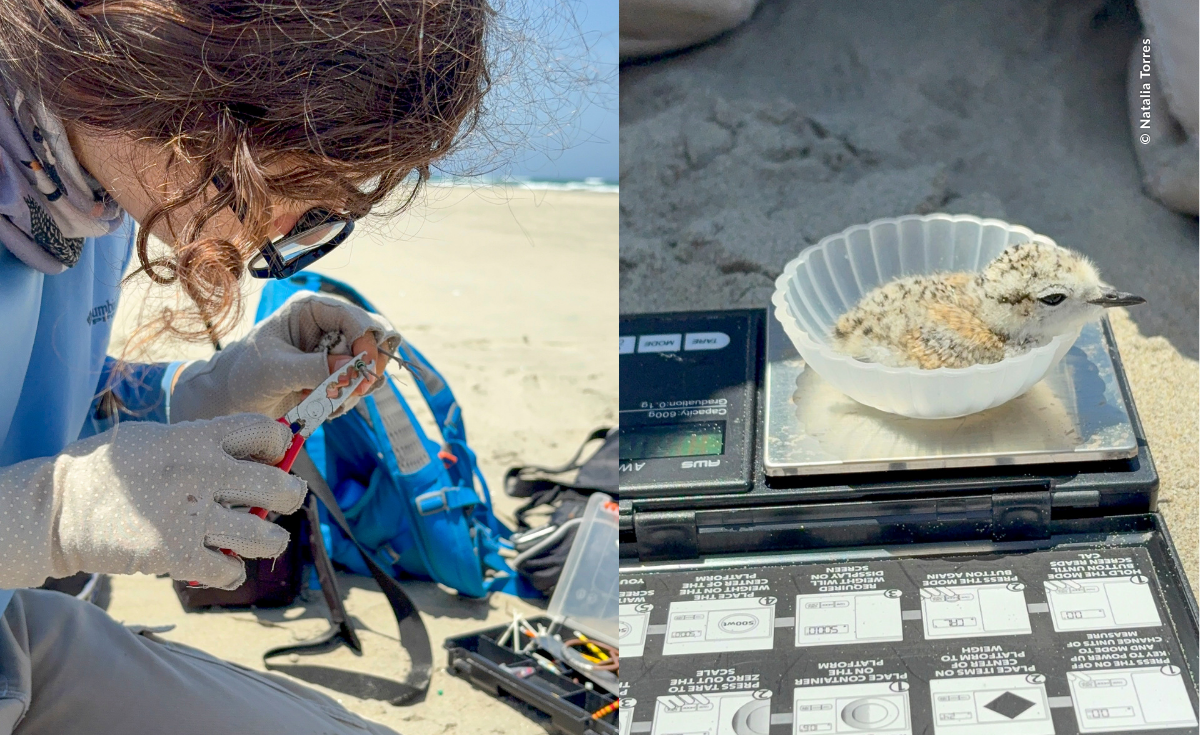
Lola was born in 2025 in one of the Snowy Plover’s (Anarhynchus nivosus) nests that we protected on the beaches of Ensenada. When she was still a chick, we placed colored bands to identify her.
A year later, she returned to Estero of Punta Banda and laid two successful nests. One of them was exposed to high tides, so our team built a barrier with sand-filled tubes to prevent the water from reaching the eggs.
Lola’s story shows what can happen when we protect this species one nest at a time: a chick survives, returns to its place of birth, and helps produce a new generation.
A threatened species in urban beaches
The Snowy Plover is a threatened species in Mexico. It nests directly on the sand, in small sand depressions that can easily go unnoticed. In Ensenada, it also shares urban beaches with people, vehicles, and pets.
“What is at stake for the Snowy Plover is its habitat. They nest here in Ensenada, on urban beaches, commonly used for recreational activities, so they are constantly sharing with people”, explained Samantha Soleno Montes, field monitor and technician at Pronatura Noroeste.
Among the main threats are the vehicles, motorcycles, and ATVs that enter the beach, as well as off-leash dogs. These can chase adult birds and cause them to move away from their chicks.
“If the parent leaves the chick, it can die from the cold because it cannot regulate its body temperature, and this can also cause it significant stress,” she noted.
Protect eggs, support chicks
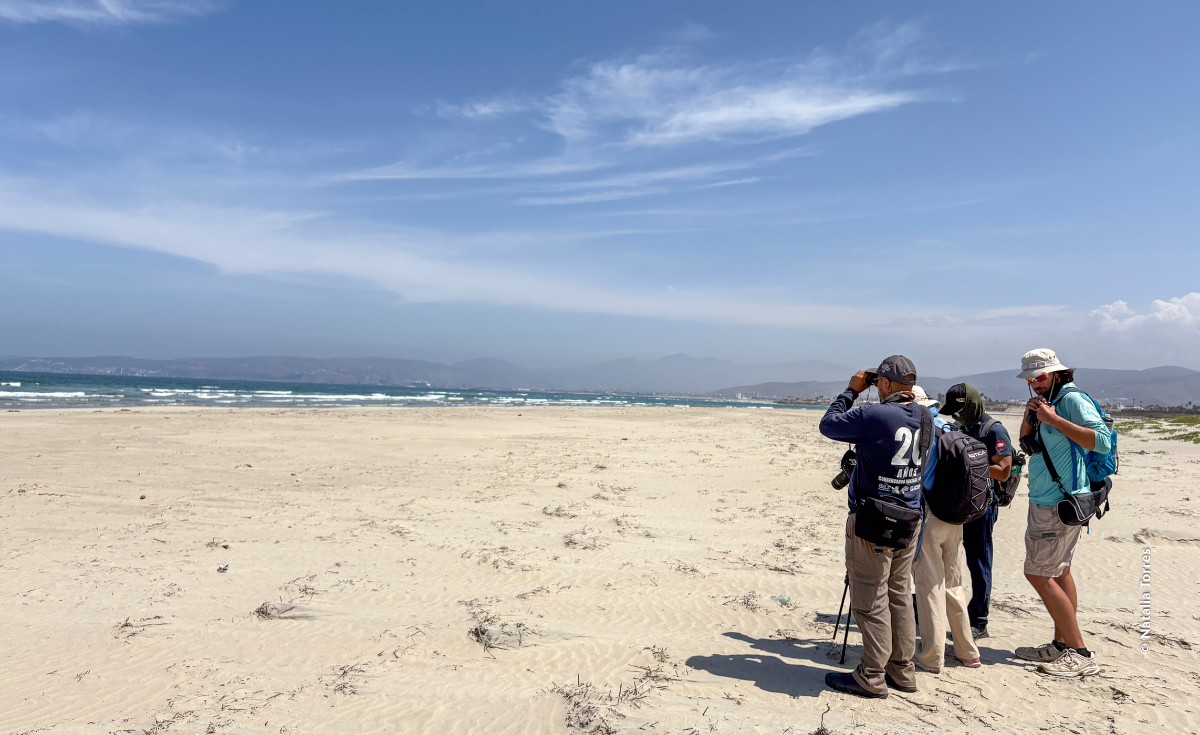
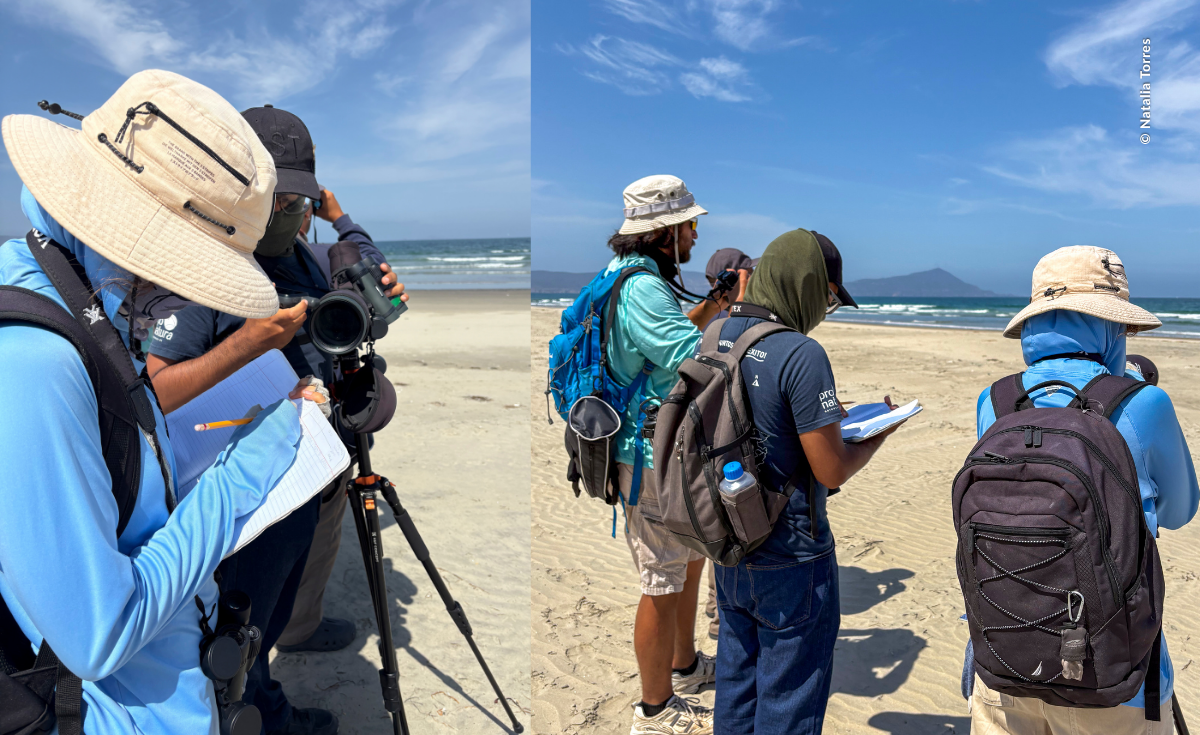
During the breeding season, we survey Pacifica Beach, Militares Beach and the Punta Banda Estero to locate nests, assess risks and monitor eggs and chicks.
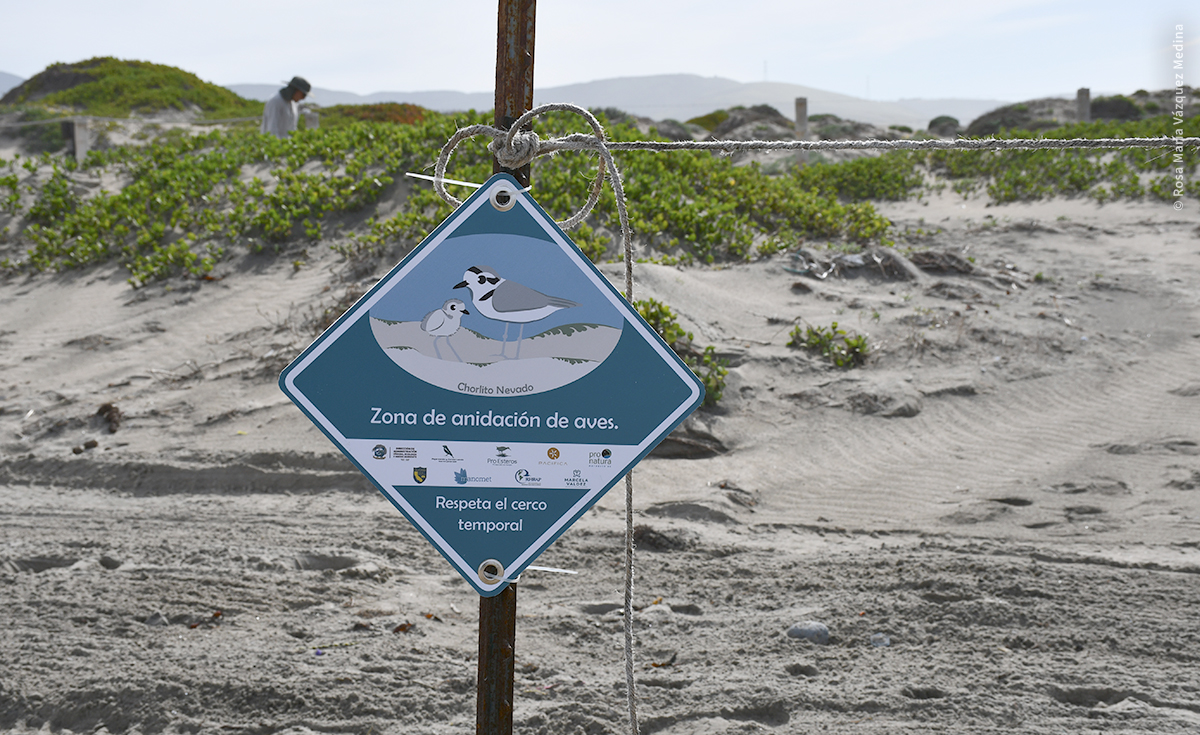
When it’s needed, we install fencing, signage and exclosures, structures that allow the Snowy Plover to enter and exit, while reducing access for dogs and other predators. In 2026, we also protected four nests with sand-filled tubes and had an environmental monitor who guided the visitors and reported violations.
“Achieving a successful nest is the first step. The next challenge is ensuring that the chicks survive until they can fly”, noted Julian Garcia Walther, coordinator of the Bird Laboratory
Results that return to the beach
The results of this season show progress. In 2025 we recorded 16 successful nests and 33 chicks. In 2026 we doubled the number of successful nests, reaching 30, with 63 chicks. The increase was 87.5% in successful nests and about 90.9% in chicks.
We also doubled the number of chicks marked with colored bands: this year, there were 38. Thanks to these codes, we can identify each individual and determine whether it survives and returns.
Adan Benjamin Mendoza Gastelum, field technician, observed birds born the previous year at Playa Pacifica this season.
“We saw chicks that had been born the previous season and had returned to try to build their nests. That is also an achievement,” he noted.
In addition to fieldwork, we conduct environmental education activities in schools and at events. Samantha and Benjamin have observed that more visitors now recognize the species and understand the purpose of the fences.
“They now talk to us from the perspective of knowing the Snowy Plover. It seems that there has been a process in people’s perception and awareness of this species”, Benjamin emphasized.
This conservation work is possible thanks to the collaboration and support of the Fundacion Manfred Hermsen Stiftung, Pro Esteros, Pajareando y Conservando, Pacifica at Ensenada Bay, the Ecological Department of the Ensenada City Council, Humedales Costeros initiative and the City Councilor Raquel E. Manriquez Peña, of the XXV Ensenada City Council.
Your support helps to sustain the monitoring, the protection of nests and chicks, the surveillance, and the environmental education activities we carry out to promote the recovery of the Snowy Plover on the beaches of Ensenada.
Community can also help to save the Snowy Plover.
The community can help us to prevent Snowy Plovers from disappearing from the beaches of Ensenada. Every vehicle that stays off the sand, every dog that walks on a leash, and every fence that people respect reduces a threat to its eggs and chicks.
“We need the community’s help in recognizing the snowy plover as the bird with which we share our home and that, like us, needs quiet and safe beaches free of vehicle traffic, ” Julian Garcia emphasized.
You can also join conservation efforts that make it possible to protect their nest and support this species throughout its breeding season. Your support helps us continue caring for the beaches that the snowy plover needs to survive.
Every protected nest can become a chick that survives, returns, and helps produce a new generation. Help us ensure that the snowy plover continues to return to Ensenada. Conservation is built one nest at a time, and it also depends on you.
Translated by: Claudia Jiménez
Reviewed and edited by: Daniella Zatarain