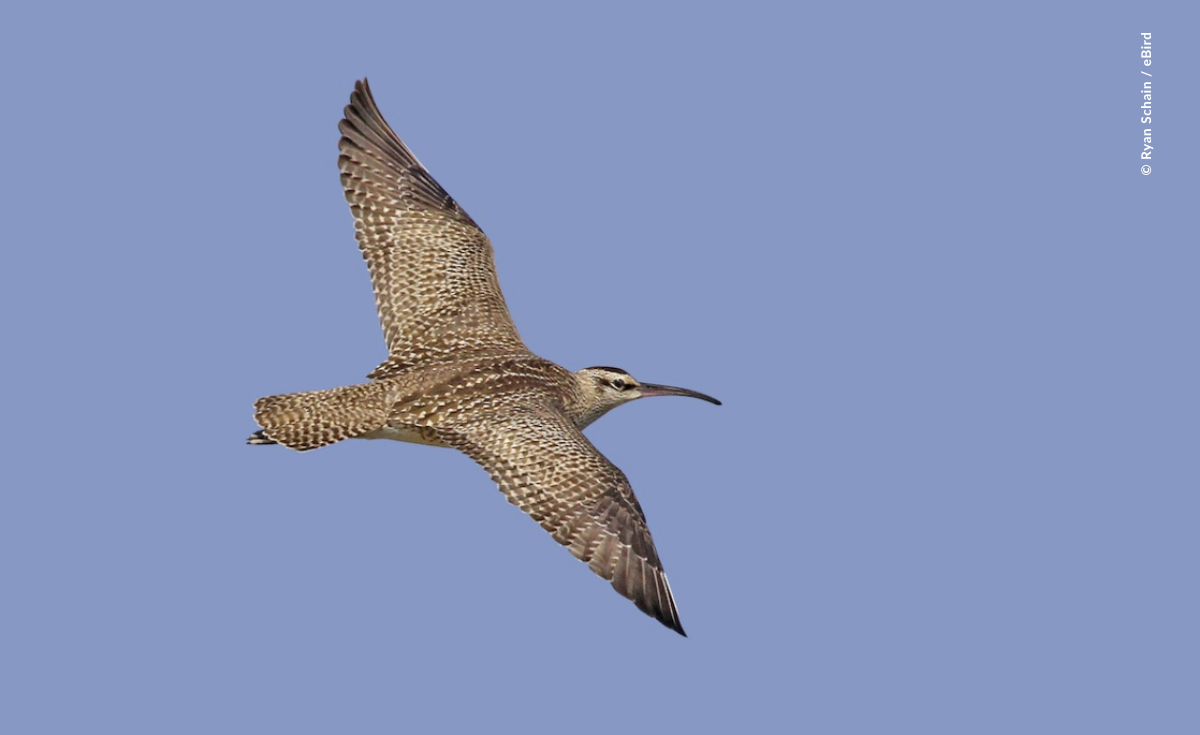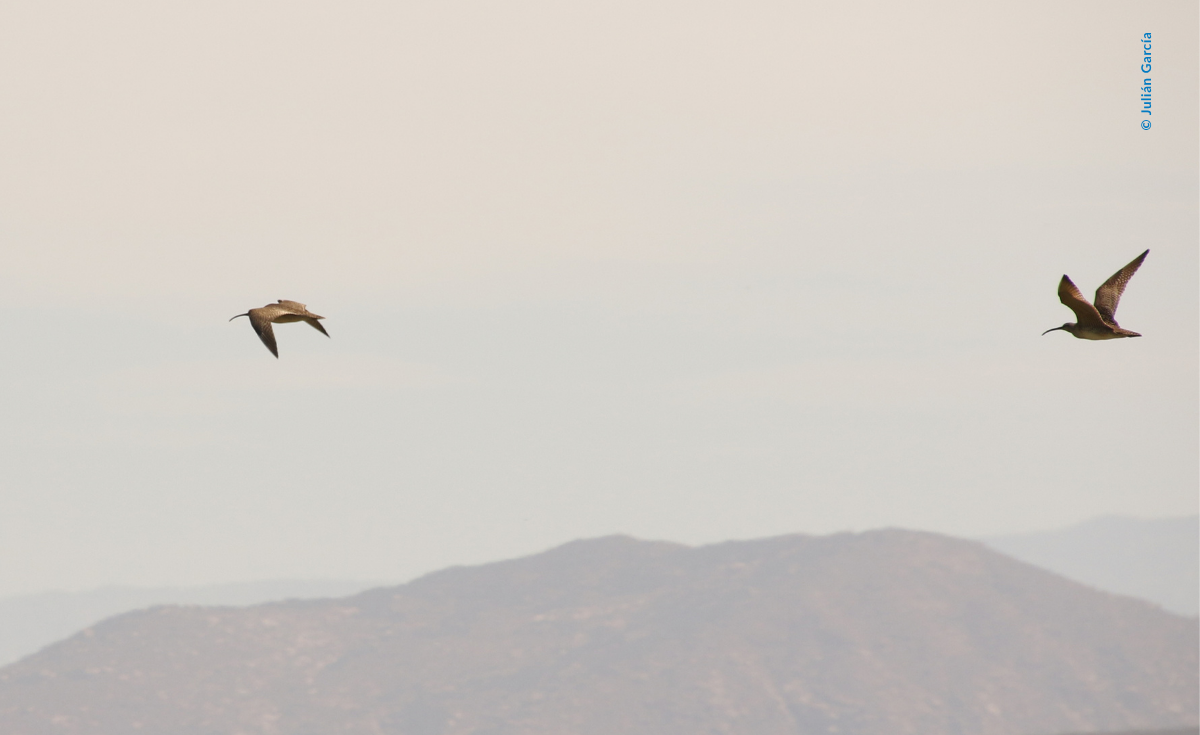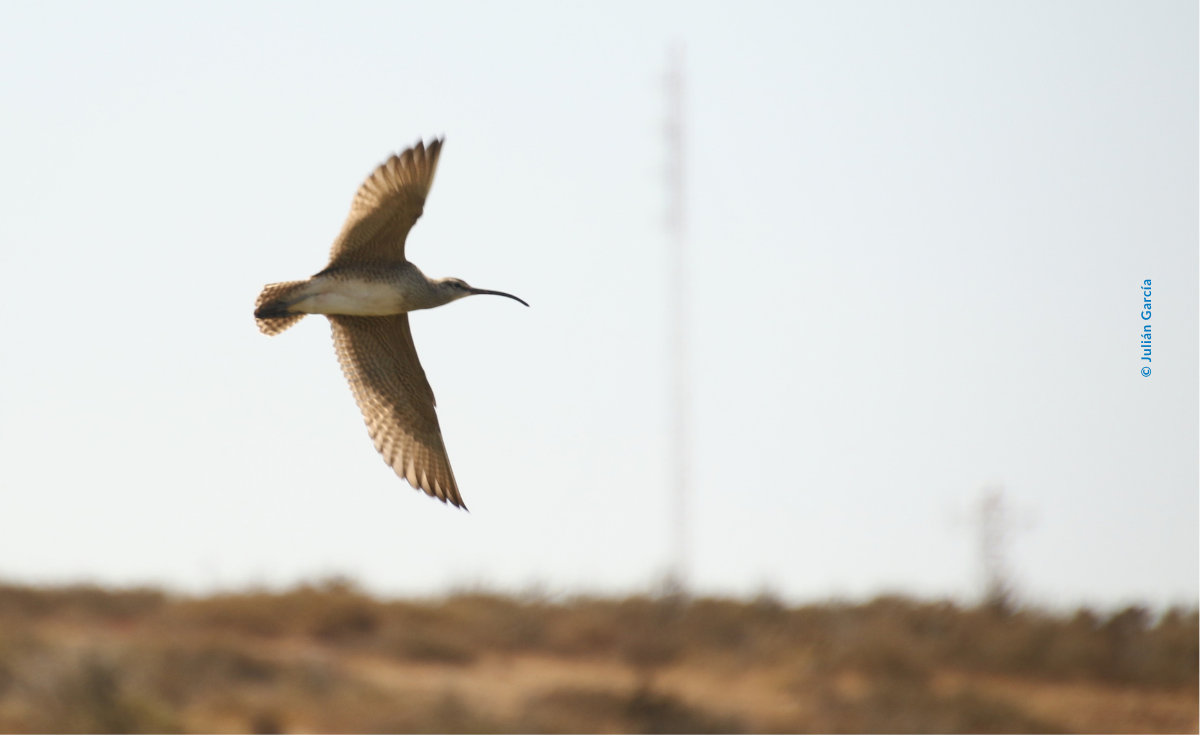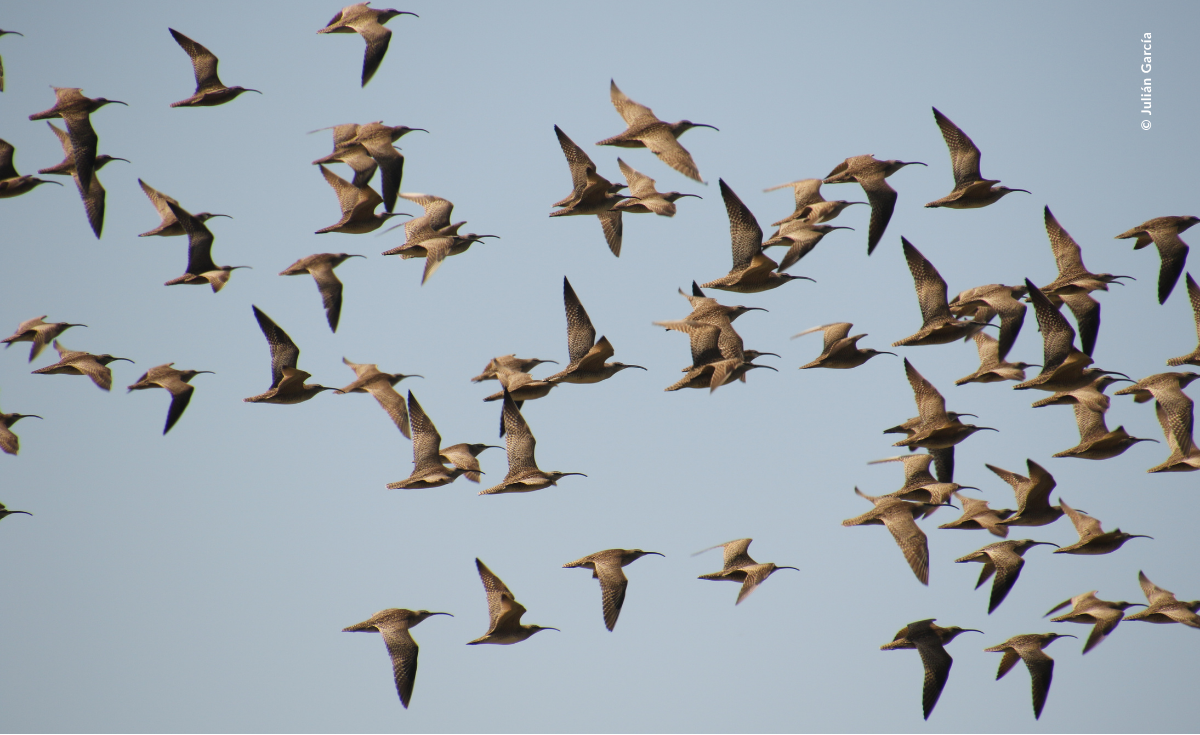


A clustering of at least 500 Hudsonian Whimbrels in the agricultural fields of San Quintín raised new questions about the weight this place has for a species capable of migrating thousands of miles across the continent.
It all started with two dots moving on a map. They were Hudsonian Whimbrels (Numenius hudsonicus) with satellite transmitters in Chile, undertaking their migration journey to the north along the Pacific Coast. When birds reached Baja California, one of them flew to an unexpected place: the agricultural fields of San Quintín.
Juan Navedo, a researcher from the Universidad Austral de Chile, told Julián García Walther, coordinator of Pronatura Noroeste’s Bird Lab, that birds were nearby. Julián went out to seek them, thinking there would be one or two individuals. When he asked for permission to visit some of them in the agricultural fields, he discovered something different.
“What was the surprise? There wasn’t just one whimbrel; there were hundreds of them in the strawberry fields. It looked like they had been planted there”. He recalls.
The count kept growing: 300, 400, and finally, around 500 individuals. A clustering like that immediately raised a question: what are Hudsonian Whimbrels attracted to in the agricultural fields of San Quintín?
Answering that question is the starting point for a new project by Pronatura Noroeste. We want to discover what Hudsonian Whimbrels eat in the fields of San Quintín and why many of them choose this place. But the answers are not just in birds; they also lie in the experience of those who work on the ground.
Together, we can get a better understanding of how birds use this landscape and identify practices supporting their conservation, seeking the region’s acknowledgment of practices suitable for biodiversity.
A stop in a continental journey
The Hudsonian Whimbrel is one of the shorebirds that performs some of the continent’s most remarkable migrations. Some individuals spend the non-breeding season in Mexico, and others reach southern Chile. After that, they undertake their journey to the Arctic to breed.
The whimbrels tracked from Chile went to Alaska, passing through Mexico. The information suggests that San Quintín may serve, at least for certain moments of migration, as a meeting point between birds coming from the south and those that spent winter in Mexico.
“What we saw in spring this year was probably the convergence of these two big groups of birds spending winter in Mexico and those already migrating from South America”, Julián explained. One of the questions we aim to answer is whether San Quintín is significant the whole year, in winter, or especially during migration.
It is important to know these places because migration is much more than flying thousands of miles. Birds need places to eat and rest along the way. Furthermore, changes in the landscape along the migratory routes and unpredictable weather conditions can modify the availability of resources throughout their journey.
Following their route on two wheels
Now, history will have new travelers. The scientists and expeditioners Timm Döbert and Leanna Carriere, as part of Wings of Survival, are following the route of the whimbrels tracked by satellite transmitters while riding bikes. This expedition, from Alaska to Tierra del Fuego, aims to bring the public to the extraordinary resistance of migratory birds, as well as the challenges and risks faced.
As they travel through Baja California, they will stop in Ensenada and San Quintín. Their arrival will spark a conversation with communities about these birds and the importance of conserving the places they use along their journeys.
In San Quintín, this dialogue will be part of the beginning of our research in the agricultural sector. From this reliable ecological information, we seek to jointly build conservation proposals considering also the agricultural production’s necessities.
“It’s part of the starting point to integrate scientific and local knowledge, and get a better understanding of the importance of the Hudsonian Whimbrel and its relationship with the agricultural landscape of San Quintín”. Julián pointed out.
Following the Hudsonian Whimbrel reminds us that none of the migratory species can be conserved by protecting just one place. Their survival depends on a chain of places separated by thousands of miles, where it can find the required conditions to continue their journey.
Today, San Quintín gives us new questions and also an opportunity: get to know these birds better, understand how they use the landscape, and sum those sharing territory with them.
Conservation of the Hudsonian Whimbrel starts with acknowledging every place on their route. Knowing it, protecting the places it needs, and sharing their history is also in our hands.
Translated by: Daniella Zatarain
Reviewed and edited by: Claudia Jiménez