

In collaboration with Terra Peninsular and South Sound Bird Alliance, we installed a new radiotelemetry station in San Quintin and are moving toward a second one in Laguna Figueroa, to expand shorebird monitoring and generate information that contributes to their conservation.
Tracking the flight of a migratory bird reveals much more than its destination. Knowing where it stops, how long it stays at a site, or which routes it uses helps us understand which places it depends on throughout its life cycle and provides information to guide conservation actions.
That is a task of particular relevance this September 6, when World Shorebird Day is commemorated and the importance of protecting these species together with the habitats they need is highlighted.
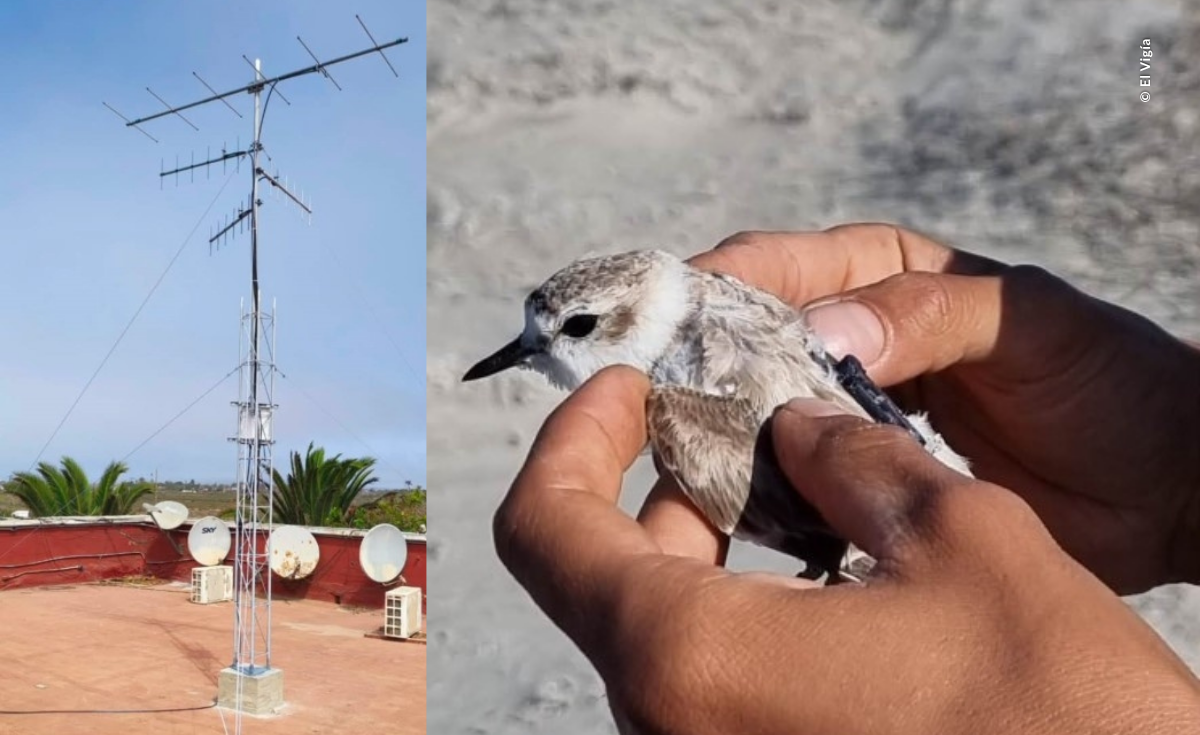
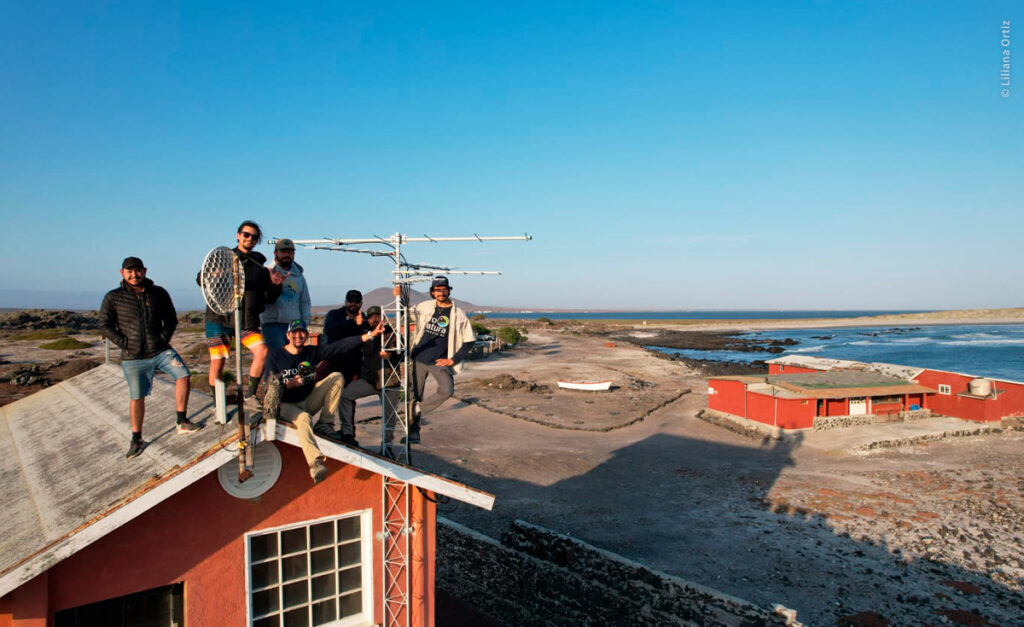
To that end, at Pronatura Noroeste we collaborate with Terra Peninsular and South Sound Bird Alliance to expand the red Motus in Baja California. On August 20, we completed the installation of a new radiotelemetry station in San Quintín, at Punta Mazo, and we have planned a second one in the Laguna Figueroa estuarine system.
The new station responds to the need to improve the capacity to detect tagged birds in one of the most important wetlands in Baja California.
Luis Abraham Aguilar Nuño, our field technician, explained that during fall and winter, San Quintín receives numerous shorebirds and waterbirds, while the beaches of Punta Mazo are used for nesting by the snowy plover (Anarhynchus nivosus), one of the species whose monitoring we promote together with Terra Peninsular.
“It is a very important ecosystem. There was already a station there, but it was on the other side of the beach, so detections were not very good. This new station is right in front of the beach where the plovers nest, which is why the decision was made to move it from the lagoon to the Santa María hotel, to better cover the nesting area,” he explained.
A network that tracks individuals on the move
The Motus Wildlife Tracking System is an international collaborative research network that uses automated radiotelemetry to study the movements and behavior of small animals, mainly birds, bats, and insects.
The way it works is pretty simple: the researchers attach transmitters that produce unique signals to the studied wildlife. When one of them passes within the range of a Motus station, the antennae can detect the signal and record information such as the moment of detection, signal intensity and the antenna that got the information.
Based on the information, it’s possible to obtain information about the behavior, direction and speed of their movements.
Currently, the network reports 2,055 stations, 402 species, and 50,932 tagged animals. This shared infrastructure allows a station installed to address a local need to also record animals tagged by other projects, even thousands of kilometers away.
From the snowy plover to great travelers
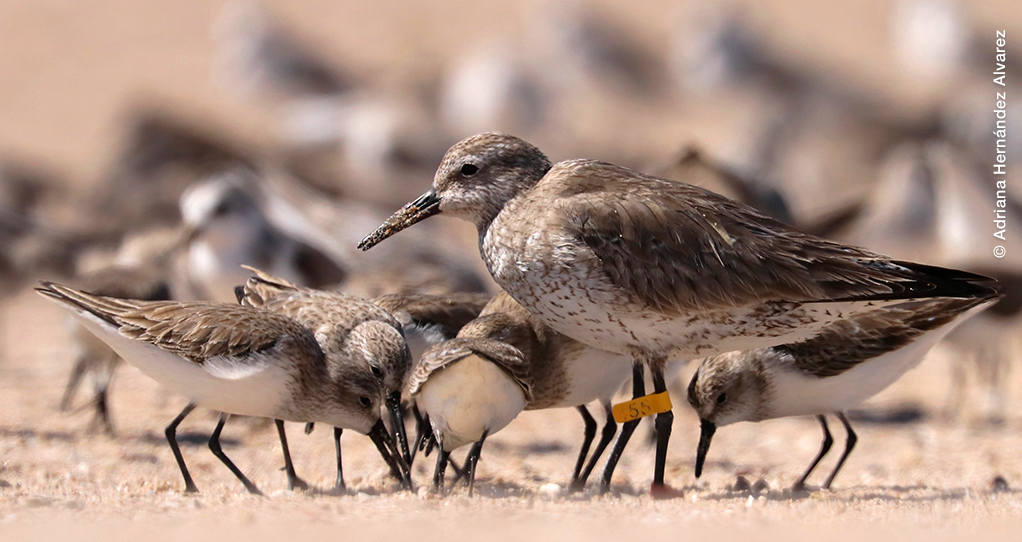
In Pronatura Noroeste we have concentrated a great part of our radiotelemetry efforts in shorebirds. Besides the snowy plover, we keep working with some other migratory species such as the pacific red knot (Calidris canutus) and the short-billed dowitcher (Limnodromus griseus caurinus).
The differences between these species are a friendly reminder to consider relying on an increasingly extensive network. Some species travel great distances during migration and are dependable on several wetlands, beaches and coastal areas along their flight path.
“Once you install a station, you are contributing to the entire network of all the researchers who are tagging individuals,” emphasized Aguilar Nuño.
Currently, the Baja California peninsula has 13 Motus stations, whose installation has mostly involved the participation of Pronatura Noroeste. This monitoring network will continue to be strengthened with the incorporation of new stations planned in Laguna Figueroa and at the El Sauzal campus of the Universidad Autónoma de Baja California (UABC), in Ensenada.
Teamwork that goes beyond
The San Quintín station also tells an important story: that of several organizations that shared the same goal but needed to join capacities to achieve it.
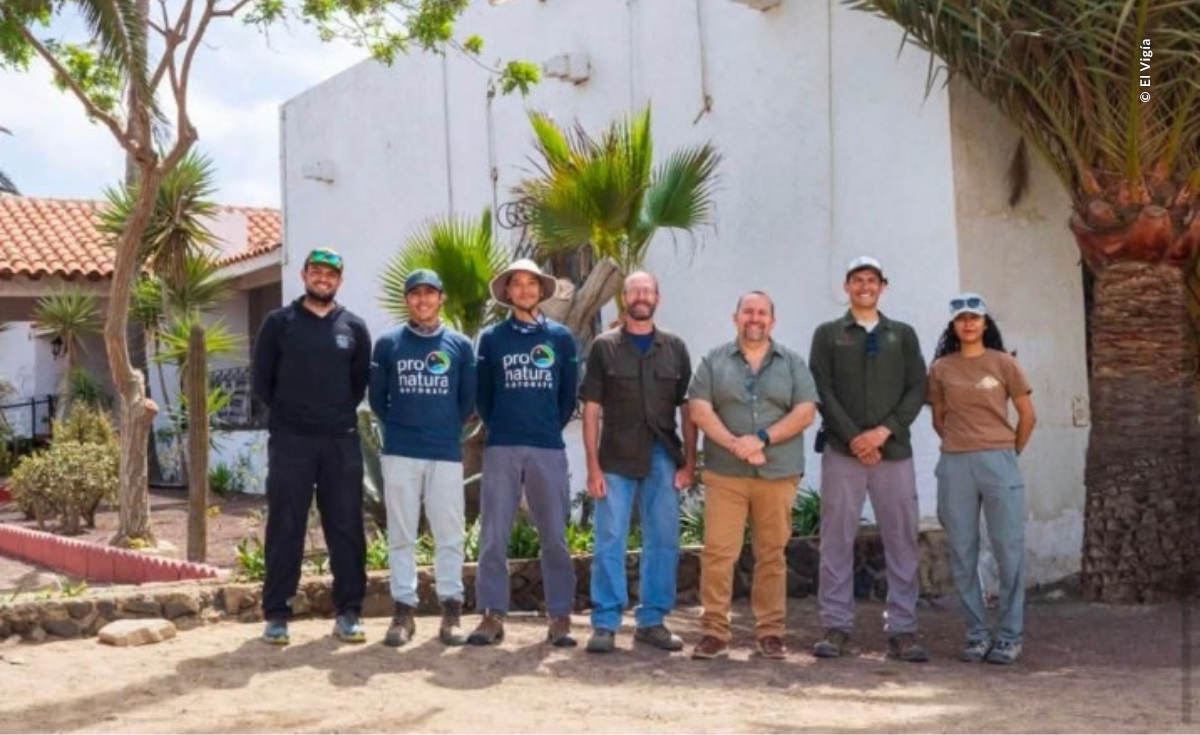
With Terra Peninsular, we had long explored the possibility of collaborating on expanding the network. In parallel, there was communication with South Sound Bird Alliance. The alignment of interests made it possible to coordinate resources, materials, technical knowledge, and fieldwork to complete not one, but two new stations.
Academic and private stakeholders also joined this collaboration. In San Quintín, the Santa María hotel provided the space to place the equipment, while the planned installation in Ensenada opens opportunities for collaboration with UABC.
“Es un ejemplo claro de que colaborando se pueden hacer más cosas que de manera individual, porque todos teníamos interés de poner una estación, pero a ninguno nos ajustaba lo que teníamos, y juntándolo todo pudimos instalar dos, entonces fue ganar-ganar para todos”, manifestó Aguilar Nuño.
“It is a clear example that by collaborating, more things can be done than individually, because we all had an interest in installing a station, but none of us had enough on our own, and by joining everything together we were able to install two, so it was a win-win for everyone,” stated Aguilar Nuño.
That collaborative logic is also the essence of Motus. An antenna installed in front of a San Quintín beach can provide information to understand what happens locally, but it can also become a point within a much larger network.
Knowing their routes is also a way to protect them. Every data point helps us identify the sites birds need to rest, feed, reproduce, and continue their journey.
En Pronatura Noroeste trabajamos para que la ciencia se traduzca en acciones de conservación. Tú también puedes sumarte a estos esfuerzos: conoce los proyectos que impulsamos, comparte las historias detrás de ellos y contribuye a fortalecer la conservación de los ecosistemas de los que dependen las aves playeras del noroeste de México.
At Pronatura Noroeste, we work so that science translates into conservation actions. You too can join these efforts: learn about the projects we promote, share the stories behind them, and contribute to strengthening the conservation of the ecosystems that shorebirds in Northwest Mexico depend on.
Translated by: Carmen Arce
Edited by: Oddary Tacuba