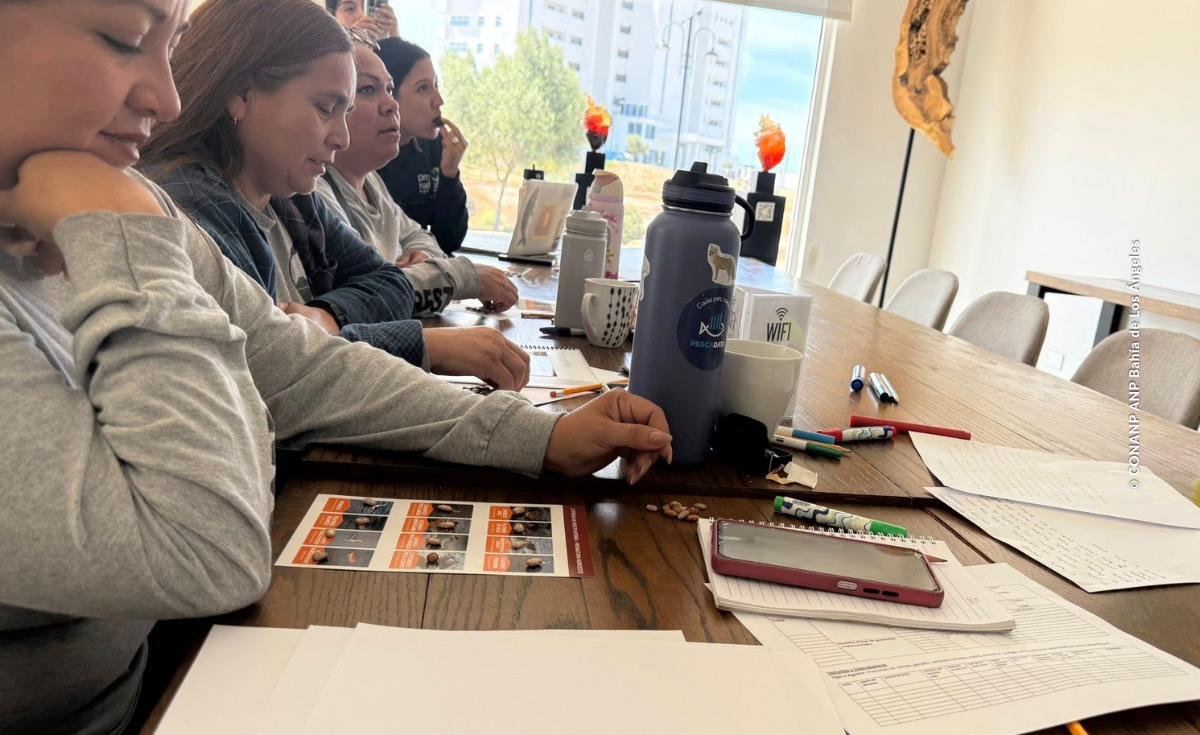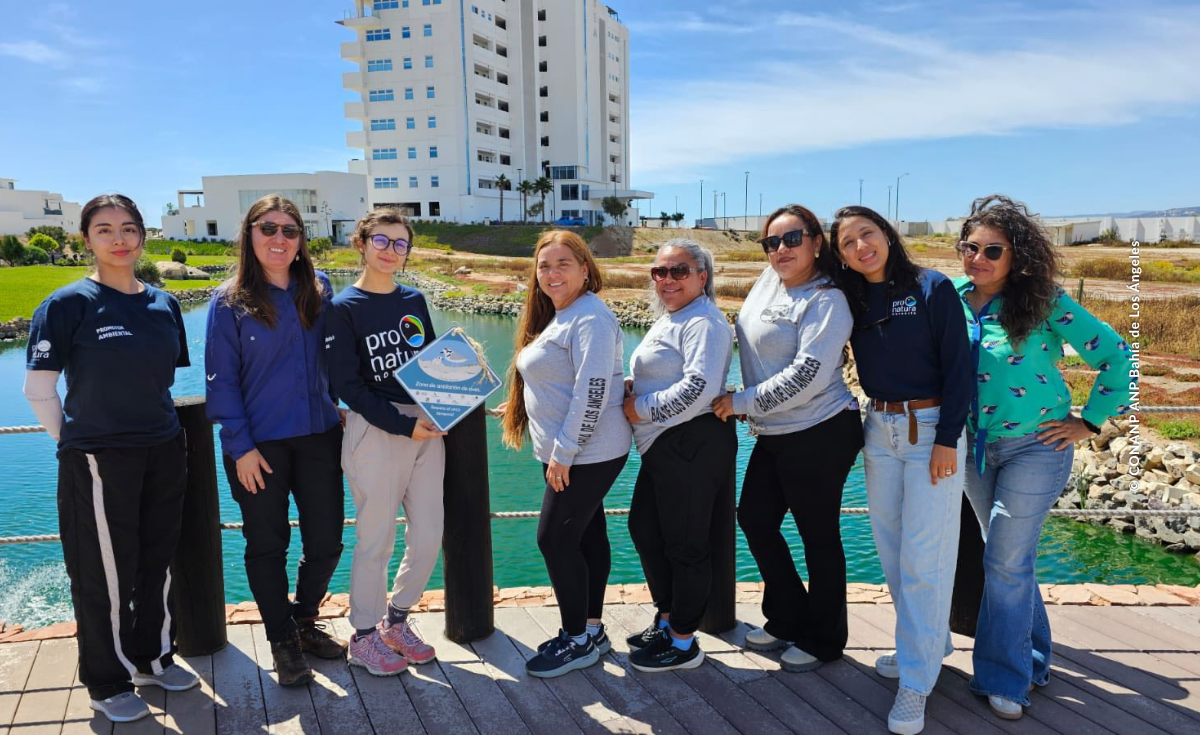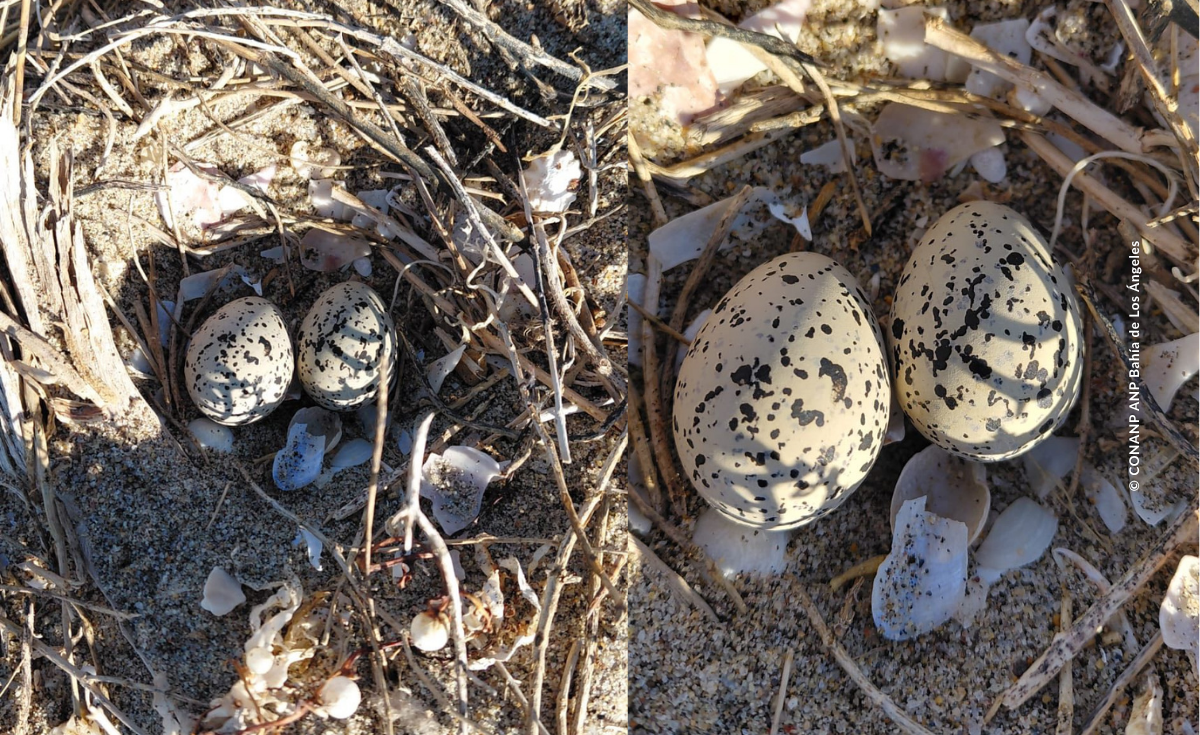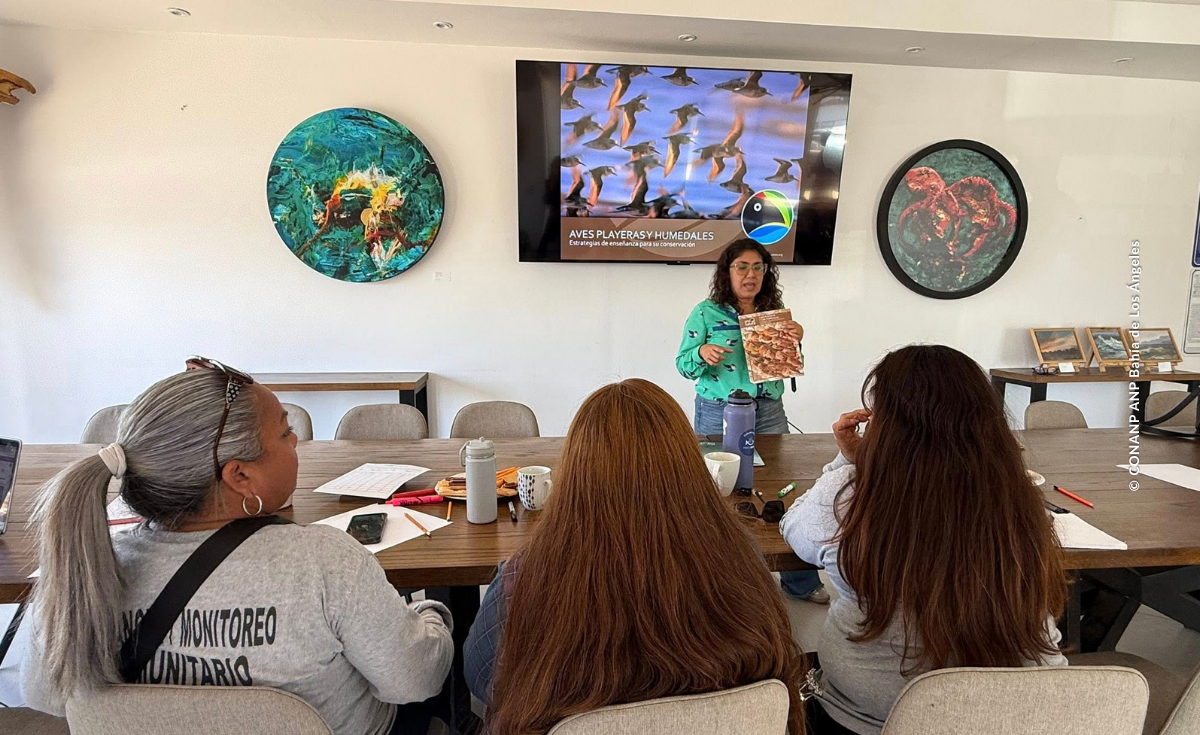


After completing a community monitoring workshop held in Ensenada, the members of Mujeres con Alas (Women with Wings) have already started to implement what they learned by identifying and protecting a Wilson’s Plover nest.
Here at Pronatura Noroeste, we believe that conservation takes on meaning when it is born within communities. This is why we celebrate that Mujeres con Alas is already implementing what they learned in the community monitoring workshop we held in Ensenada.
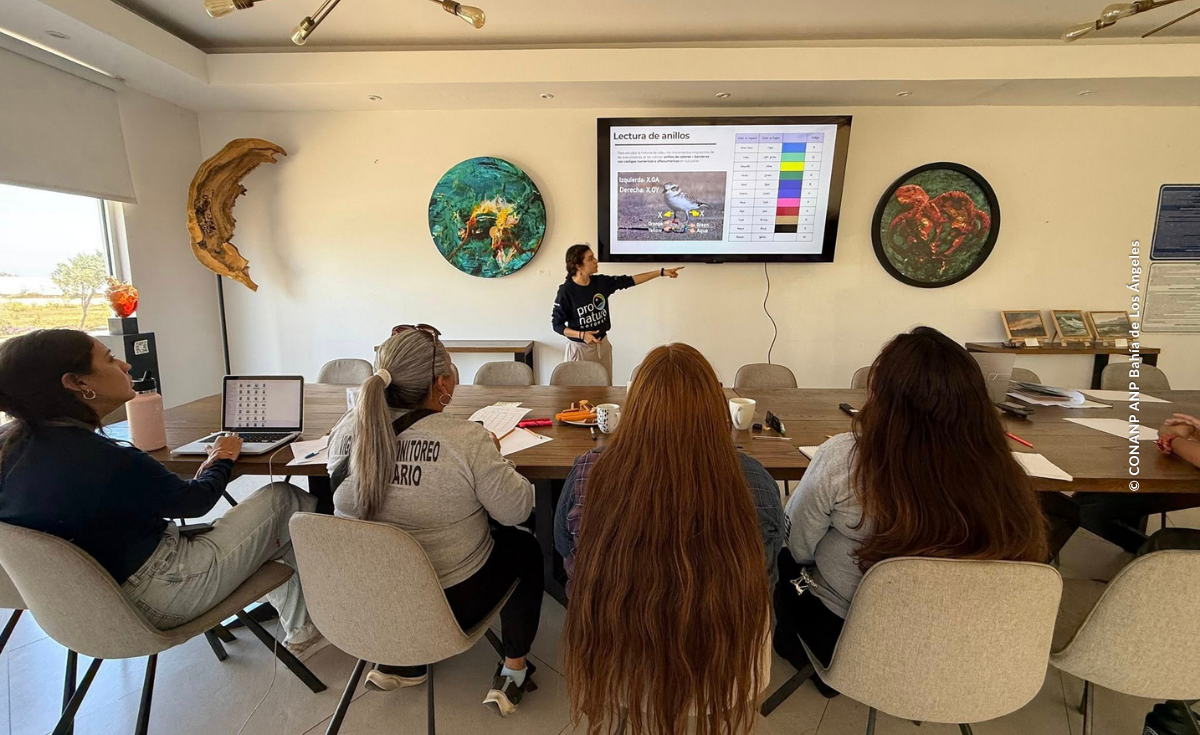
The two-day workshop counted with six participants: three groups belonging to Mujeres con Alas, CONANP personnel, and Pronatura Noroeste respectively. The goal was to provide them with tools to identify, monitor, and safeguard the shorebird nests such as the Snowy Plover (Anarhynchus nivosus) and the Wilson’s Plover (Anarhynchus wilsonia).
“Both birds have very similar seasons and behaviors, so we complement the Snowy Plover’s monitoring with the Wilson’s Plover’s,” as said by Pronatura Noroeste member Samantha Soleno Montes, who is in charge of the workshop and the monitoring in Bahía Todos Santos.
They were told how to gather data, search for nests, and how to protect said nests so they can carry out these activities on the beaches of Bahía de los Ángeles, Baja California.
“There are no nesting records of the Snowy Plover around there. In case they did not find any, there is the Wilson’s Plover, which is also an important bird, but there’s barely any gathered data of that one in Bahía de los Ángeles,” Samantha emphasized.
We combined theory and practice during training: from behavior, trail, and season recognition to protection techniques such as excluders and signage.
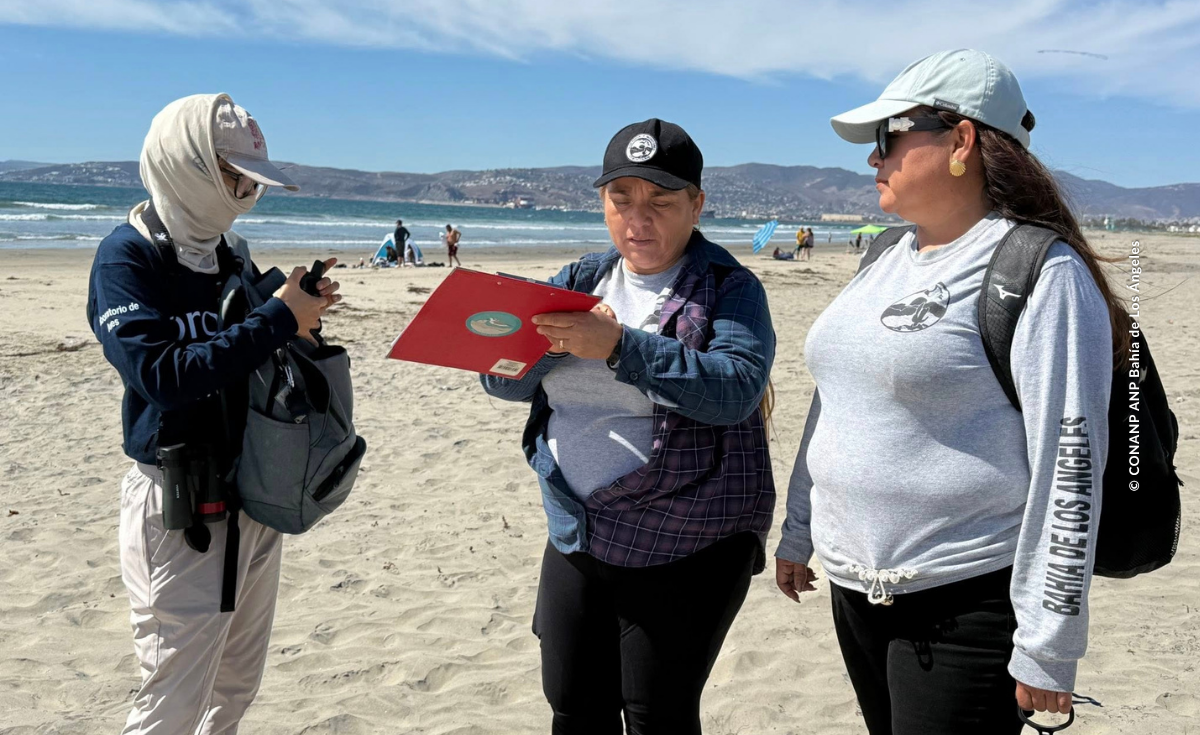
We surveyed people from the beaches of Ensenada; places like El Ciprés and Lengüeta Arenosa in Estero de Punta Banda, where participants not only observed active nests, but also carried out hands-on monitoring exercises. In a particularly memorable moment, the participants successfully located a nest with three eggs inside by following tracks on the sand; an experience that turned out to be essential for replicating these practices within the community.
The impact was immediate. Upon returning to Bahía de los Ángeles, the women conducted their own monitoring and found a Wilson’s Plover nest. “I was truly moved to see their genuine interest. As soon as they got back, they went straight to the beach to monitor and protect the nest. They mentioned facing several threats, but it’s clear they were mindful enough to take notes and that they are putting everything into practice. It’s incredibly encouraging to see them engage so quickly,” she shared.
Both the Snowy Plover and the Wilson’s Plover face serious threats, as they nest directly on the beach, where they are exposed to free-roaming and domestic dogs and cats, unregulated tourism, vehicle traffic, and disturbances to dune habitats. This makes the discovery in Bahía de los Ángeles particularly significant, as there are few nesting records for these species in the area.
Community-based monitoring allows us to understand site-specific threats and make informed management decisions, going from installing nest exclosures to promoting environmental education campaigns. Every action can make a meaningful difference in the reproductive success of these birds.
Moreover, this process is already fostering positive shifts in how people relate to their coastal environment. In Ensenada, for example, we have observed that frequent visitors are beginning to show greater respect for nesting zones, keeping their pets on leashes, and sharing this information with others.
Just like Mujeres con Alas, you too can contribute to the protection of our shorebirds by respecting nesting areas, keeping pets on leashes, avoiding driving on the beach, and spreading further awareness.
Translated by: Alejandra Picos & Oddary Tacuba
Reviewed and edited by: Ma. Del Carmen Arce