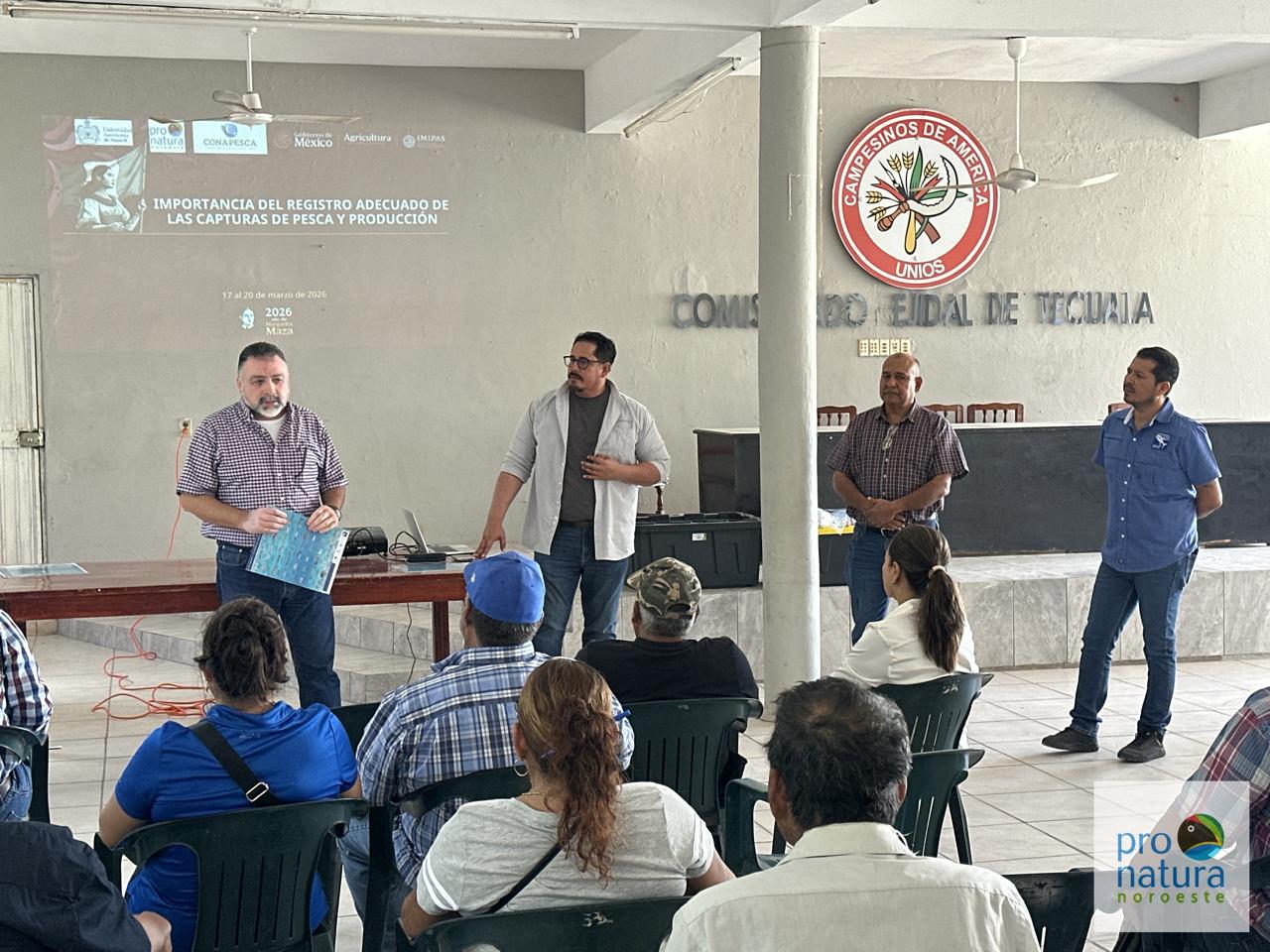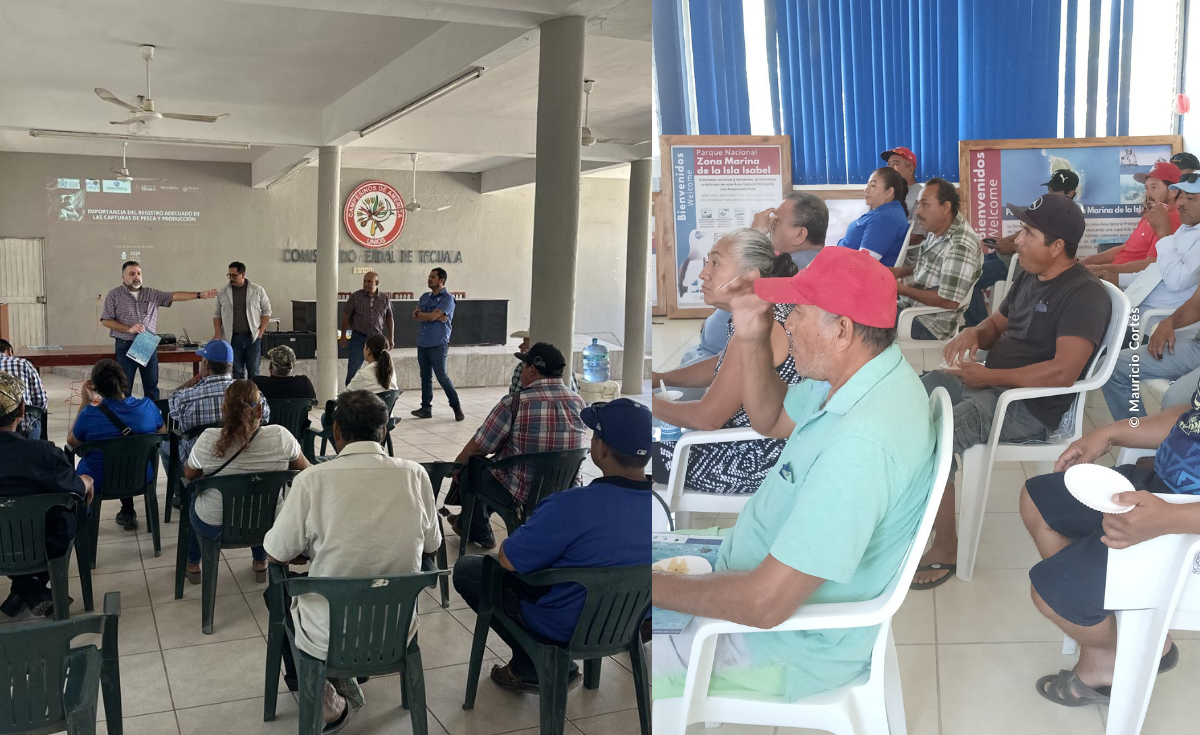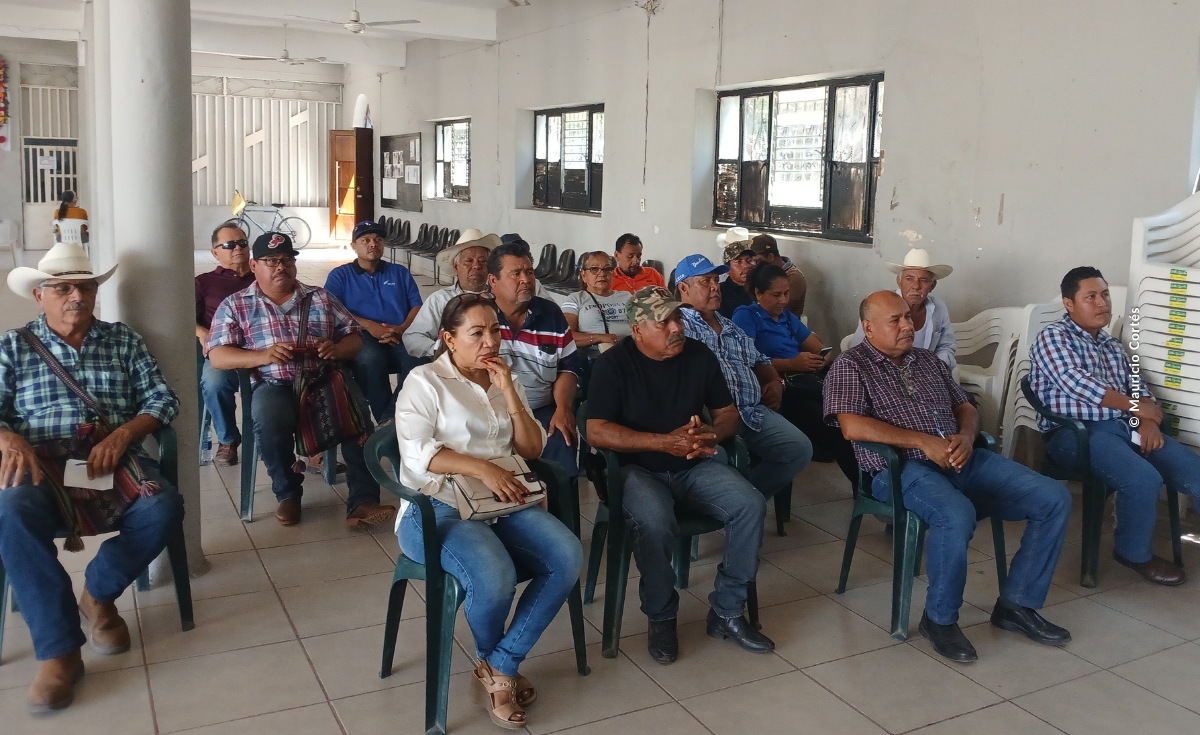


Con el objetivo de fortalecer la calidad de la información pesquera y avanzar hacia una gestión más sostenible de los recursos marinos, en Pronatura Noroeste impulsamos junto a otras organizaciones, del 17 al 20 de marzo, una serie de capacitaciones dirigidas al sector pesquero en distintas regiones de Nayarit, beneficiando de manera directa a cerca de 160 personas.
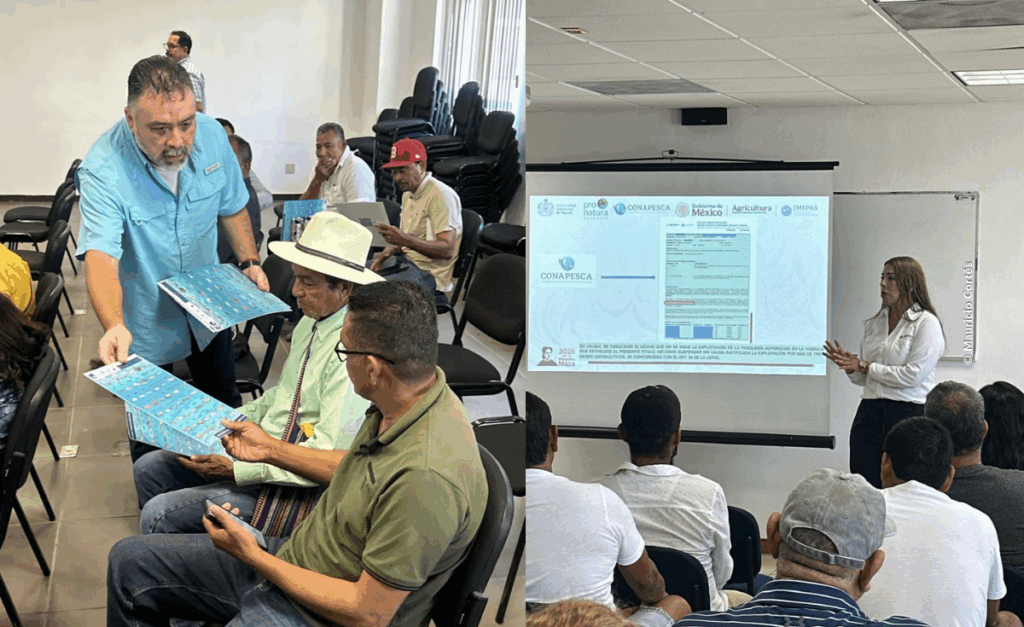
These actions were developed alongside the National Commission of Aquaculture and Fisheries (Conapesca), the Mexican Institute of Research in Sustainable Fisheries and Aquaculture (IMIPAS), and the National School of Fisheries Engineering of the Autonomous University of Nayarit (ENIP-UAN) as part of the follow-up to the Marismas Nacionales Finfish Fishery Improvement Project (FIP – Escama) and the Fishery Management Plan for White Snook, Colorado Snapper, and Curvinas.
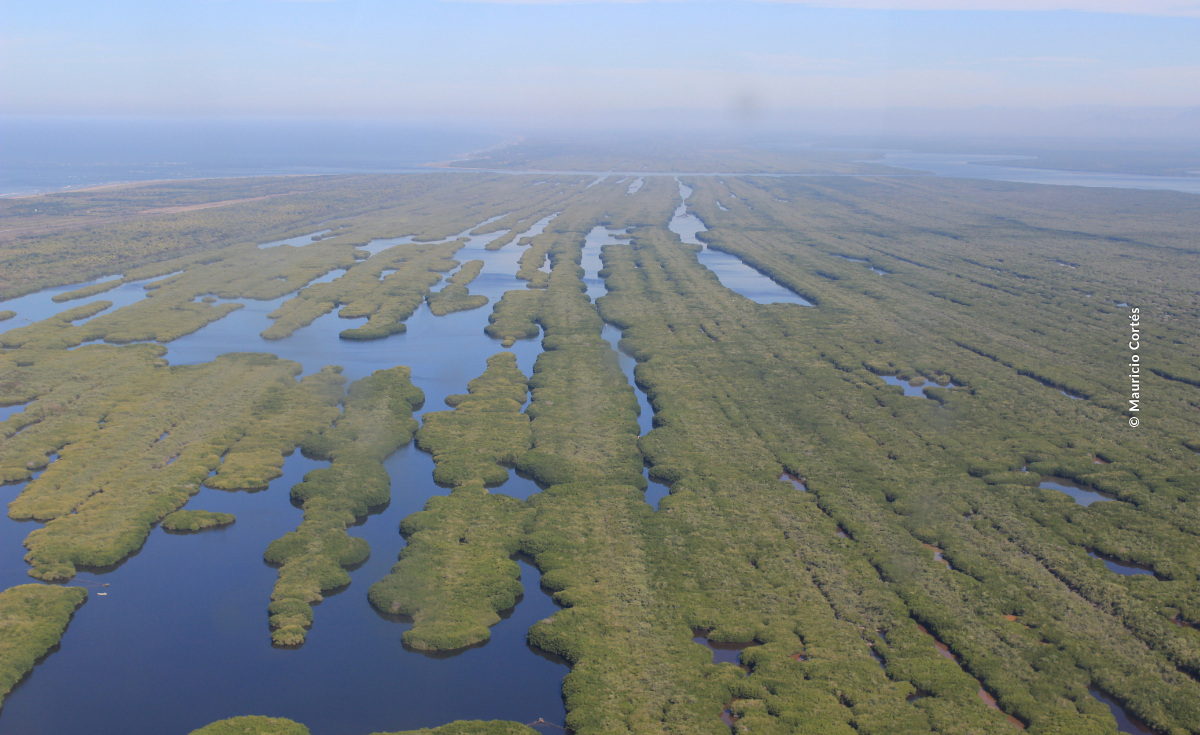
Coastal and marine fishing is one of the main productive activities in Nayarit, contributing to more than 60% of the production of the state and providing a livelihood for thousands of families. Nevertheless, its high diversity, with nearly 100 species of finfish, also presents significant challenges, especially in generating reliable information that allows for informed decisions regarding its sustainable use.
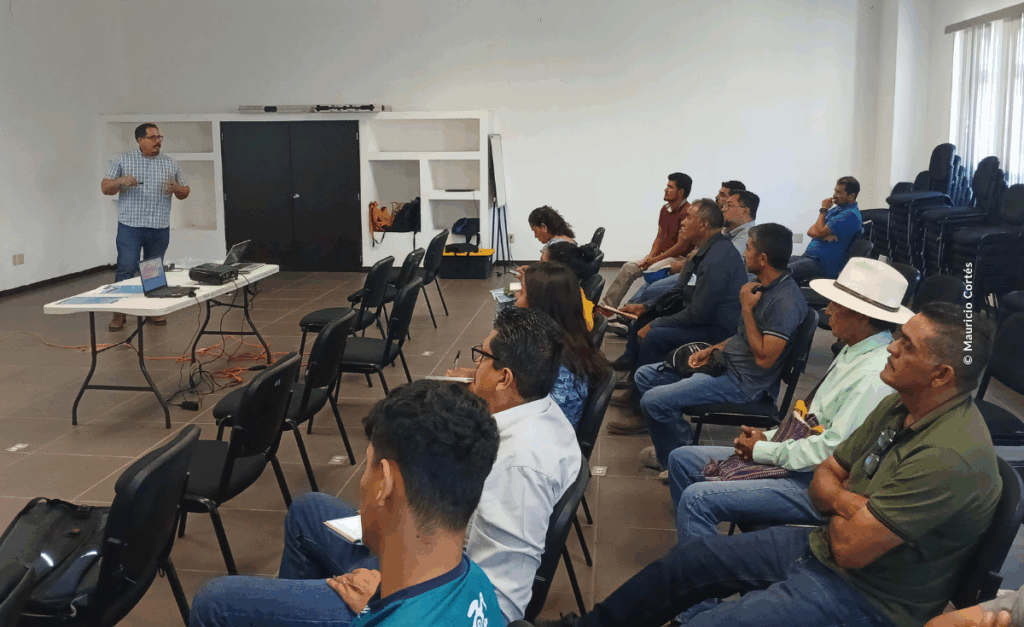
Training to Strengthen Evidence-Based Fisheries Management
As part of this effort, we conducted working sessions in different municipalities of the state of Nayarit, focused on strengthening the technical capabilities of the fisheries sector and improving the quality of information that supports decision-making for the sustainable management of marine resources.
Beyond operational learning, these training sessions facilitated progress toward standardization in the recording and analysis of fisheries data, a key element for understanding the true state of marine resources and designing more effective management strategies. By strengthening the use of the Fisheries and Aquaculture Information System (SIPESCA), the generation of reliable data is promoted, directly contributing to planning at a regional and national scale.
“The goal is to strengthen the flow of fisheries information that feeds into decision-making processes in the country. By improving the quality and consistency of catch data, we support authorities and the sector itself by providing them with more robust tools for the mindful management of fisheries,” explained our regional coordinator, Mauricio Cortés Hernández.
One of the most relevant components was the participation of cooperatives, permit holders, and personnel responsible for registering information, thus consolidating a local network that is better prepared to generate and use fisheries data in a strategic way.
Cortés Hernández highlighted as well the fundamental role that women, who in many cases lead the use of official platforms and data processing with an outstanding quality, play.
During the sessions, opportunities for improvement in the recording systems were also identified, such as the incorporation of local species and correction of inconsistencies regarding the available information. These discoveries will allow the fine tuning of institutional tools and strengthening the processes involving fisheries management, contributing to more accurate decisions about closed season, sustainable use, and conservation of resources.
Collaboration for Sustainable Fishing
We found that having accurate information is required to strengthen tools like bans, exploitation permits, fisheries refuge zones, and strategies for sustainable management.
Cortés Hernández said, “This training stems from the FIP – Escama project and the need the fisheries sector itself expressed, who was already demanding to strengthen the management at SIPESCA. We appreciate their willingness and celebrate the collaboration between government, academia, and civil society to train nearly 160 people from different localities.”
We acknowledge that the continuity of these efforts and sharing knowledge are key aspects to improve the fisheries statistics and guarantee resource sustainability in the long run.
That is why, from Pronatura Noroeste, we invite you to join us, stay informed, and help build a more responsible and sustainable fishery along our coasts. There is still so much to do, so come and join us!
Translated by: Nicole Fuentes & Ma. Del Carmen Arce
Reviewed and edited by: Alejandra Picos & Grecia Martínez