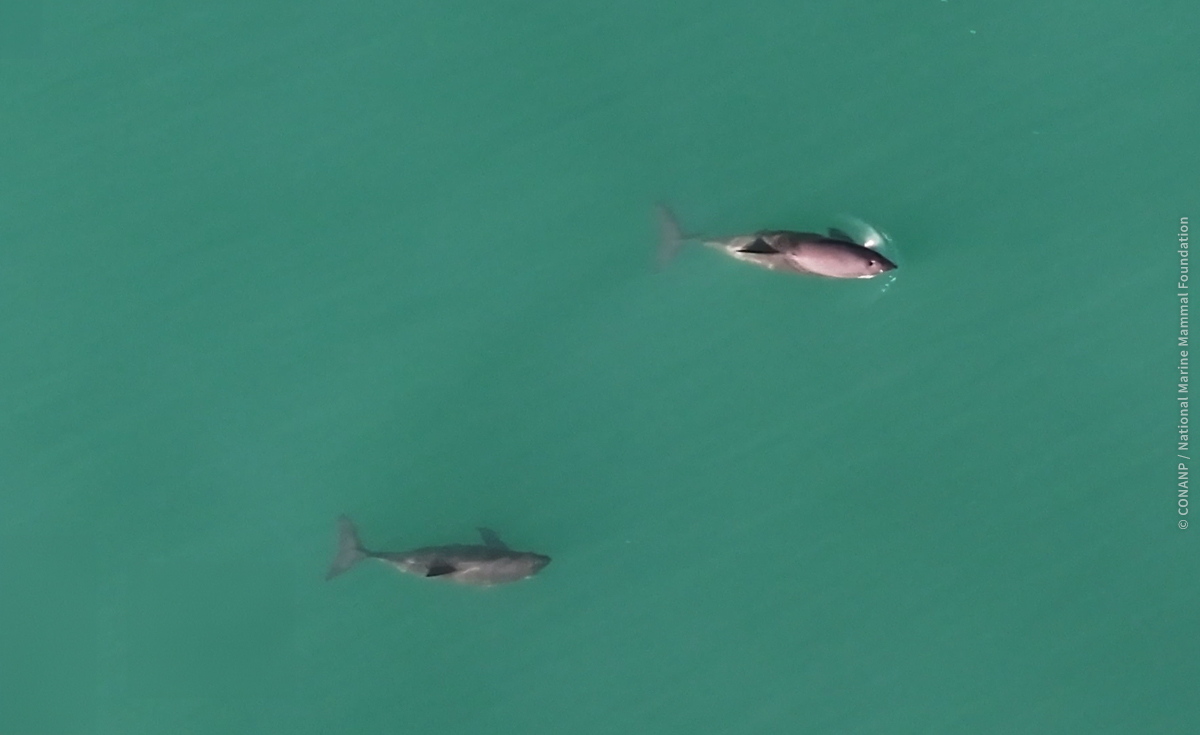


The vaquita (Phocoena sinus) lives only in the Upper Gulf of California, Mexico. It is the most endangered marine mammal in the world and has been listed on the IUCN Red List as ‘’Critically Endangered’’ since 1996.
Vaquita reach about 1.5 meters in length and weigh up to 50 kg. The species is
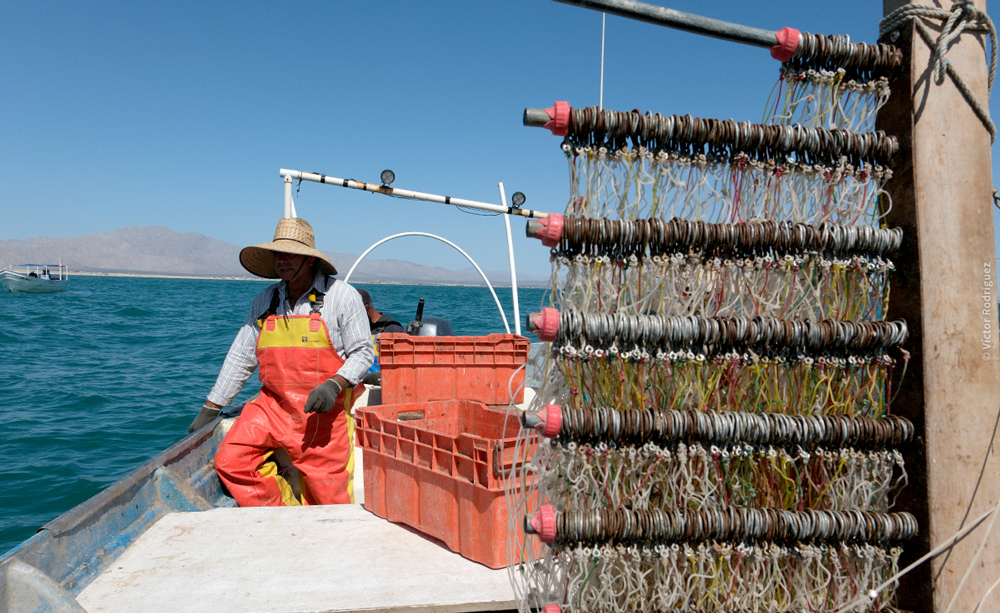
critically threatened due to entanglement in gillnets, the most used fishing method in
the area. When vaquitas get captured in the gillnets, most of the time, they die.
What are we doing for its conservation?
In the framework of our conservation program in the Upper Gulf of California,
Pronatura Noroeste actively works to protect the Vaquita. Our approach combines environmental education and community participation in two key communities:
Golfo de Santa Clara in Sonora and San Felipe in Baja California. This effort is
carried out in collaboration with our local allies, including Mexico’s Commission of Natural Protected Areas (CONANP), PESCA ABC, and our local partners and benefactors, among them the Cetacean Action Treasury (CAT). We have joined forces with them to progress to an effective conservation with local attachment.
Our actions are focused on serving the main barriers that hinder the transition of
extensive use of gillnets to more sustainable fishing arts, compatible with the
protection of Vaquita, using an intervention model structured in the following
areas:
Technical: We promote the usage of more selective and sustainable fishing gear,
such as handlines and hooks, representing an easy alternative to gillnets. This work is supported by Pronatura Noroeste’s leadership in the Fishery Improvement Project
(FIP) for Gulf corvina, yellowfin croaker, and bigeye croaker fisheries, promoting practices that are compatible with marine conservation.
Economic: We support the development and strengthening of schemes that make sustainable fishing alternatives economically viable, in order to improve the financial stability of fishers’ families transitioning to more responsible practices.
Social: We promote active community involvement through social marketing tools, especially focusing on youth and fishers. Through educational activities in
community spaces –such as fairs, schools, and public events– we provide
information about the ecological importance of conserving the vaquita and the positive impact of using alternative fishing gear.
As part of our participative strategy along with CONANP, we also promote actions of citizen science by training local youth in vaquita monitoring techniques. They will
take part in a research cruise scheduled for September this year.
Through the Upper Gulf of California Conservation Program, Pronatura Noroeste works towards a long-term solution based on the community establishment that reduces the need for constant operations and strengthens co-responsibility in the
protection of the vaquita, the only species of its kind in the world.
A united front to save the vaquita
Every July 18, International Vaquita Day is commemorated to raise awareness about the critical situation of this endemic species of the Upper Gulf of California, considered the most endangered cetacean on the planet. In this context, Pronatura Noroeste, through the Upper Gulf of California Conservation Project, promotes a lasting, community-based solution that contributes to its conservation, reduces the need for constant operations, and strengthens shared social responsibility in the protection of this unique species.
The work we do at Pronatura Noroeste on community self-regulation in the Upper Gulf of California is supported by our donors and partners:
● Alumbra Innovations Foundation
● Comercializadora El Sargazo
● Comisión Nacional de Áreas Protegidas
● Consejo Mexicano de Promoción de los Productos Pesqueros y Agrícolas
● Fondo Canadá para Iniciativas Locales
● Food and Agriculture Organization of the United Nations
● International Conservation Fund of Canada
● Monitoreo Administrativo Regional de Especies Marinas
● National Oceanic and Atmospheric Administration
● Oceans 5
● Pesca ABC
● Re:Wild
● Cetacean Action Treasury
● Reserva de la Biósfera Alto Golfo de California y Delta del Río Colorado
● Secretaría de Medio Ambiente y Recursos Naturales
Translated by: Itzel Romero & Elizabeth López
Reviewed and edited by: Hannah Peralta