

Pronatura Noroeste supports nine Fedecoop cooperatives in this project, which has transformed the barred sand bass fishery through improvements in quality, management, and marketing that have multiplied its value, thereby strengthening the fishermen’s economy.
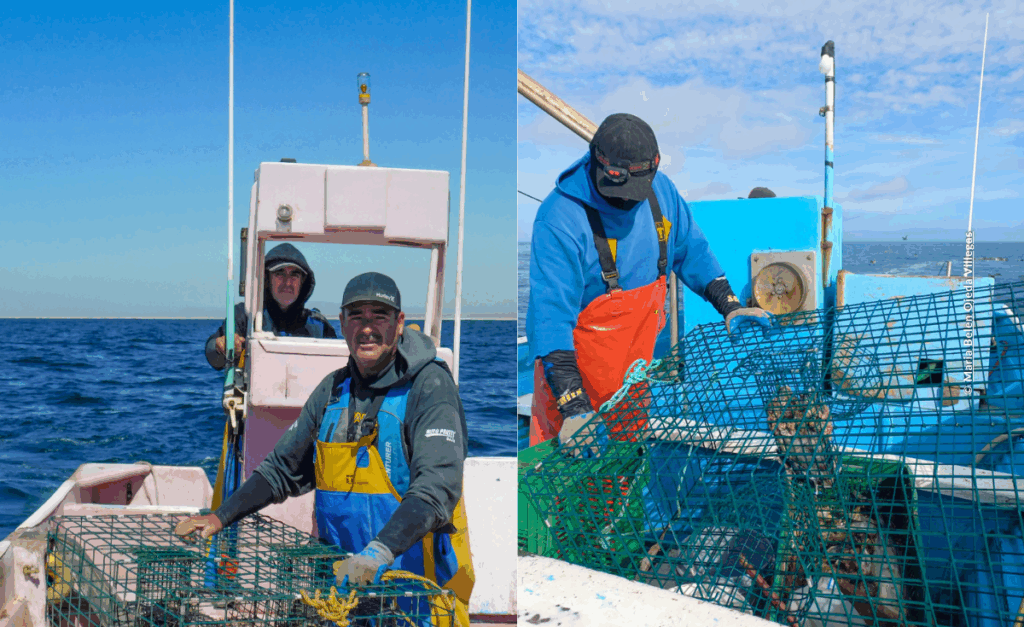
Since 2018, Pronatura Noroeste has been supporting the development of the Fishery Improvement Project (FIP) for the barred sand bass (Paralabrax nebulifer) in the Pacific Ocean off Baja California Sur. Today, this process has become an example of how organization and innovation can create new economic opportunities for fishing communities facing uncertain markets and increasing pressure on marine resources.
Our Sustainable Fishing Coordinator, Laura Elizabeth Ibarra García, said that the FIP is
directly supported by nine cooperatives from the Regional Federation of Cooperative
Societies of the Baja California Fishing Industry (Fedecoop), a project that was created as an alternative to high-value fisheries such as lobster and abalone, which in recent years have faced considerable uncertainty due to declining catches and instability in marketing.
“The barred sand bass is a fish with high commercial potential, given its attractive
characteristics as a product: its availability in large volumes, its quality, and its versatility. These qualities sparked interest in adding greater value and making better use of the resource, which led to the initiative to form a FIP with the goal of bringing the fishery to a sustainable state,” she explained.
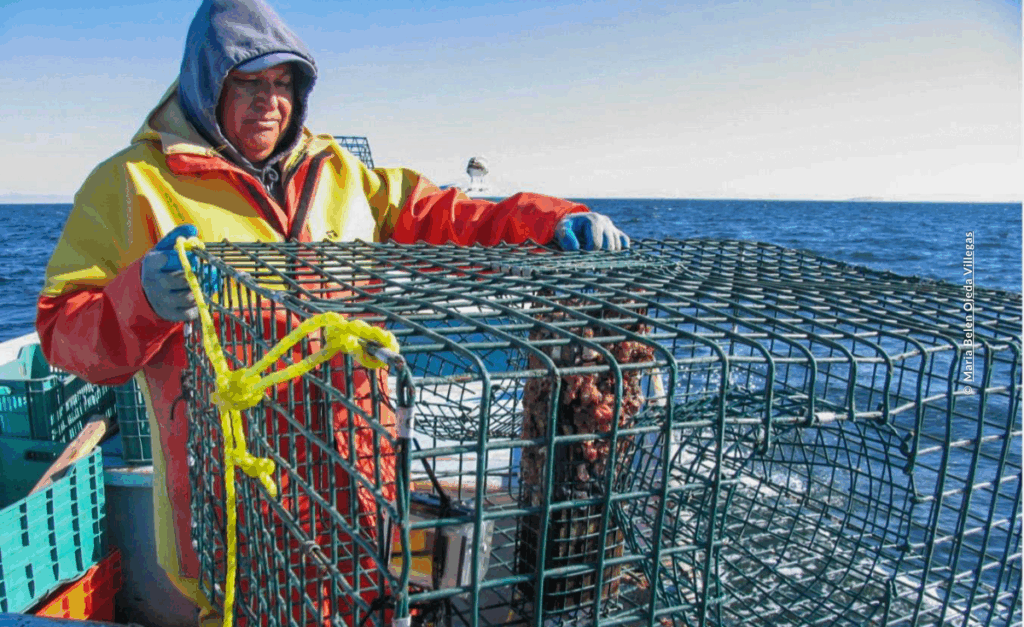
Quality transforms the value of the barred sand bass.
For many years, cooperatives participating in the FIP have worked with multiple civil society organizations to raise standards and obtain high-quality products.
The process works like this:
* Catch with bait using a highly selective trap that guarantees only large fish are caught.
* Sacrifice using the Japanese Ikejime technique so that the fish does not suffer, which
allows toxins that can spoil the product to be eliminated.
* Immediately frozen on board for preservation.
* Transport to the processing plant for filleting.
‘’In the Punta Abreojos cooperative’s processing plant, everything is well standardized for producing vacuum-packed fillets. They sell them fresh and whole, but they also have the capacity to produce high-quality vacuum-packed fillets using a very rigorous process,” said Laura Ibarra.
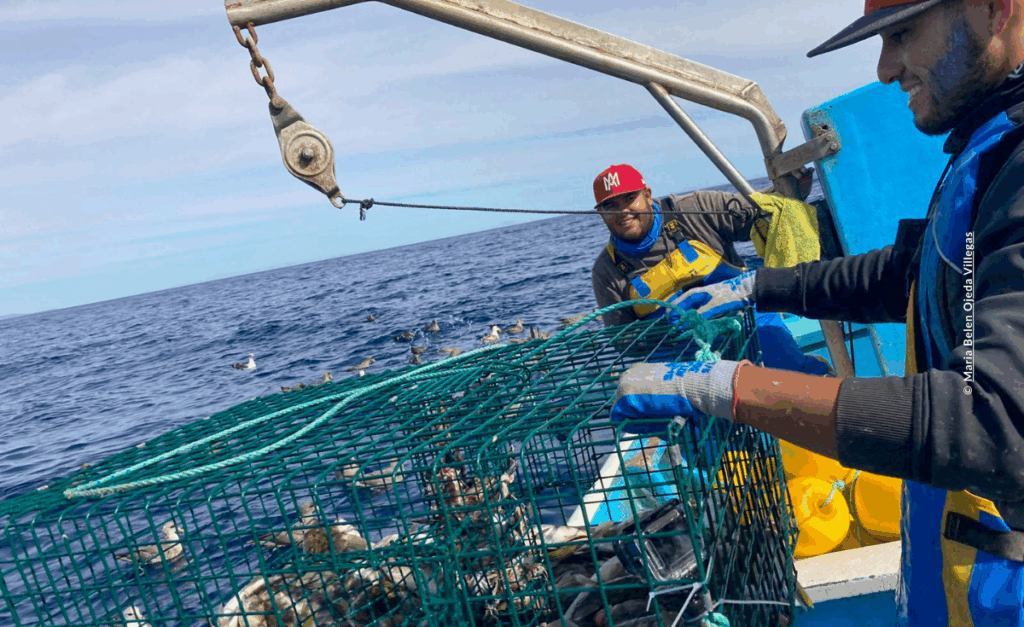
Sustainable management and transparency to open markets
Quality without sustainability is an impossible path. Therefore, we have been working
alongside the Mexican Institute for Sustainable Fisheries and Aquaculture Research
(IMIPAS, per its initials in Spanish) and fisheries science experts to evaluate populations, adjust the traps to capture larger sizes, review fishing seasons, and establish catch limits agreed upon with the cooperatives.
“These cooperatives are highly aware that it is not worth it to harvest a lot of volume if they don’t have a place to sell it and it ends up going to waste; they would rather preserve it in the water”, she remarked.
In Pronatura Noroeste, we support FIP with the coordination of actions, the implementation of cutting-edge analytical methods, a traceability system from the sea to the final client, a digital fisheries monitoring system, follow-up on the work plan, and a progress record on the Fishery Progress platform.
This web platform allows companies, NGOs, and other stakeholders to track and report the progress of Fishery Improvement Projects (FIPs) on a global scale, providing transparency and consistent data to improve the sustainability of fishing.
This transparency has enabled commercial partnerships, allowing a portion of the product to reach national markets and, in smaller volumes, the United States.
“The barred sand bass, with the quality and sustainable processes that I stated, is selling at a price that is about four times higher than its value in the local market”, said Ibarra García.
Fishers in the cooperatives that collaborate in the FIP, who are the primary beneficiaries, have taken note of this, and their current mindset is that it is no longer worth catching the barred sand bass unsustainably if they are only going to be paid 20 pesos per kilo or less.
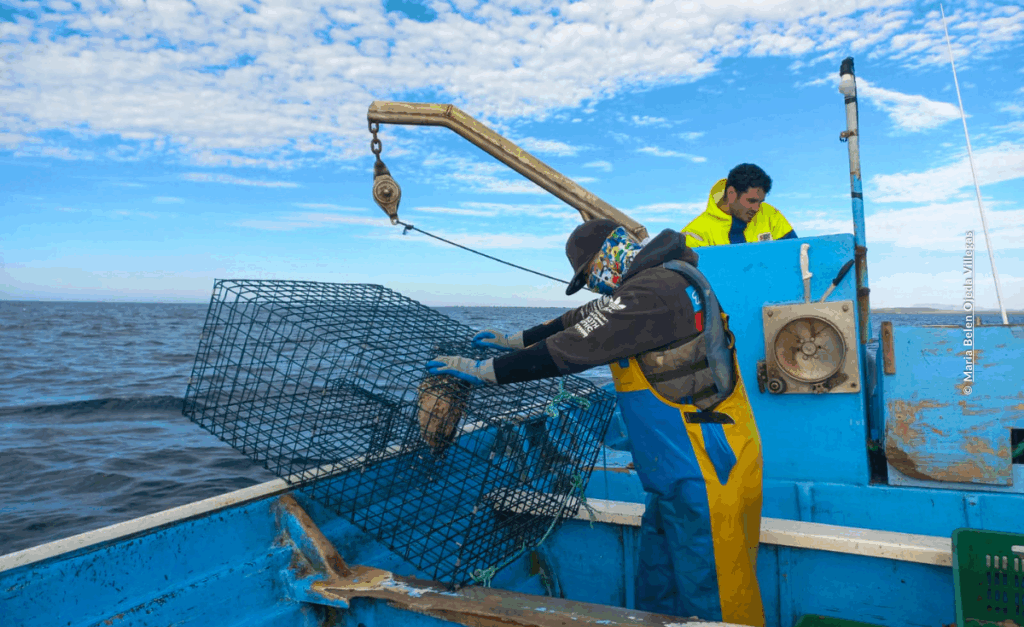
The next step: to the MSC certification
The next major step is to achieve the international certification for sustainable fisheries of the Marine Stewardship Council (MSC). The barred sand bass fishery under this FIP is increasingly close to meeting the standard, but the immediate challenge is to develop a financial strategy to cover the costs of certification and recertification.
The cooperative visualized clear benefits: better access to markets, scientific support in the
face of potential commercial restrictions, and a strengthened reputation as a model fishery.
“By going from being a second-grade fish that almost nobody wanted, with better management quality, as they have done, [the fish] changed dramatically and is now considered like a first-grade fish in terms of quality”, sustained our Sustainable Fishing coordinator.
At Pronatura Noroeste, we will continue to support this process because we believe in fishing that strengthens the communities and cares for the ecosystems.
If you want a future with healthy oceans and strong local economies, help us to amplify this effort and choose sustainable products, share this story, and join us in building a future for our seas.
Translated by: Belinda Carpio & Itzel Romero.
Reviewed and edited by: Edgar Bolaños.