

From Pronatura Noroeste we shared the scientific proof presented by our Bird Laboratory Coordinator in a webinar assembled by Los Angeles Birders, it alerts about the risks faced by one of the most important ecosystems for the migratory and coastal shore: the coastal wetlands.
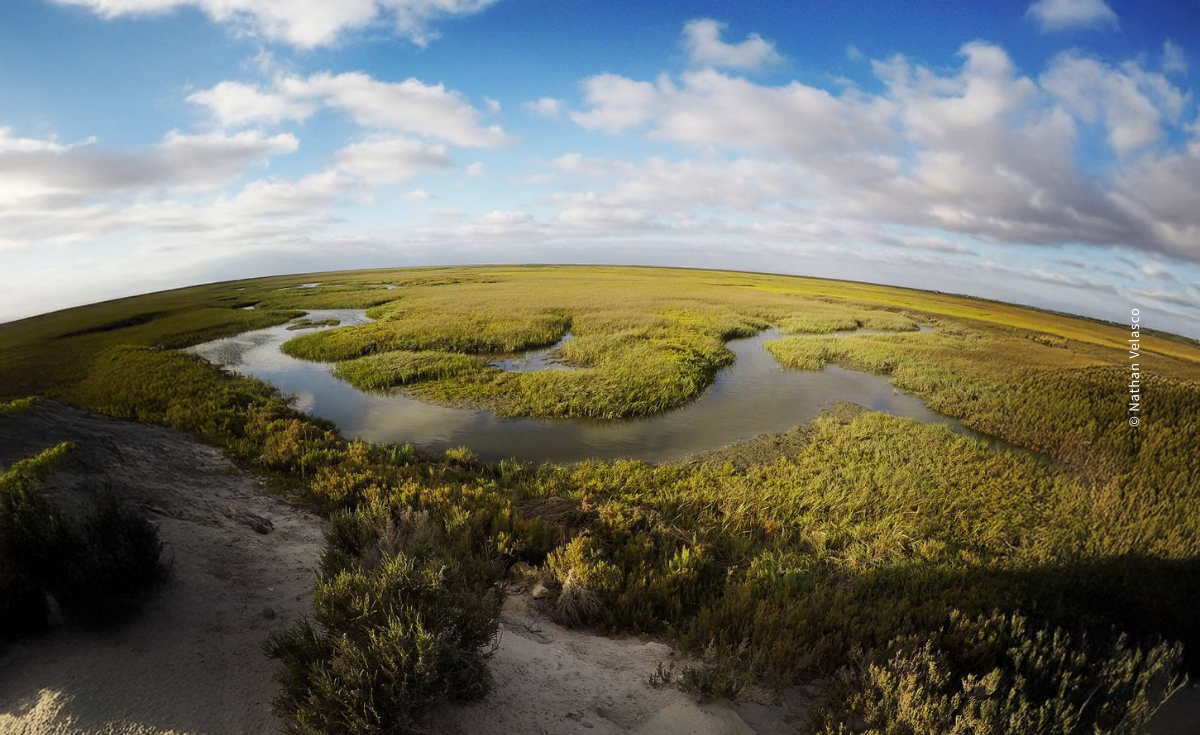
In the World Wetlands Day margin, from Pronatura Noroeste we alert about the silent but increasing risk that represents sea level rise, which could flood up to half of coastal wetlands from Mexico permanently by 2050.
During “The effects of sea level rise on the habitat of coastal waterbirds in Northwest Mexico” webinar, assembled by Los Angeles Birders, our Bird Laboratory Coordinador, Julián García Walther, shared findings that confirms the high vulnerability of the coastal wetlands of the country, and the risk that this represents for the migratory routes of the Pacific.
“The sea level rise is one of the consequences of climate change. The changes seem
subtle but they are definitely happening, the thing we are not sure about is how much sea level rise to expect in the future. There's a lot of uncertainty”, He said.
Wetlands outside the climatic radar
The researcher pointed out that one of the major concernings of his research is that these actions to address this threatening are not included in many plans of handling of protected areas or the climatic planning from the state nor nationally, even though the high vulnerability of big zones in Northwest Mexico located under 10 meters (32.80 ft.) above sea level. He emphasized “it is necessary to plan from now to guarantee that these ecosystems will be resilient in the future.”
Before the absence of official data, our Bird Laboratory Coordinator explained that he
relied on satellite images to identify and digitize around 300 beaches and coastal wetlands in Mexico. When combining this information with models for the sea level rise from 2050, the results were overwhelming.
“About half the extension of wetlands we have in Mexico, it can be at risk of permanent overflooding in just 25 more years. It’s a lot”, he said.
Millions of birds rely on limited wetlands
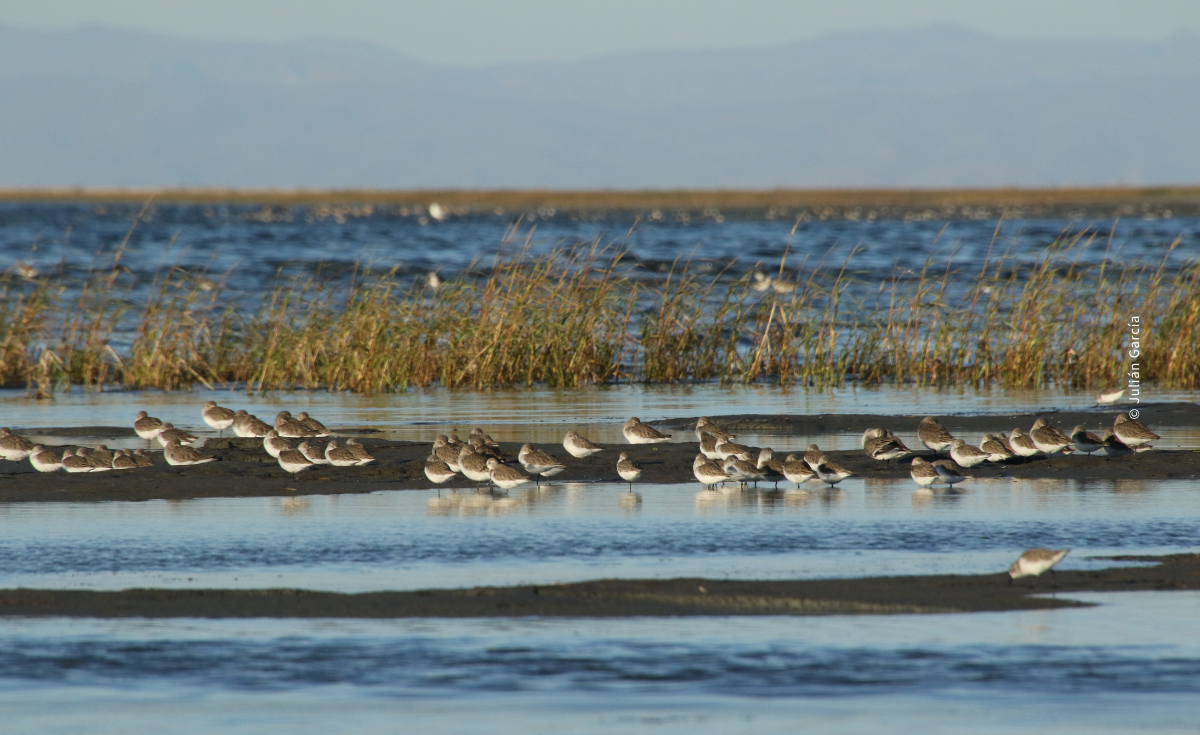
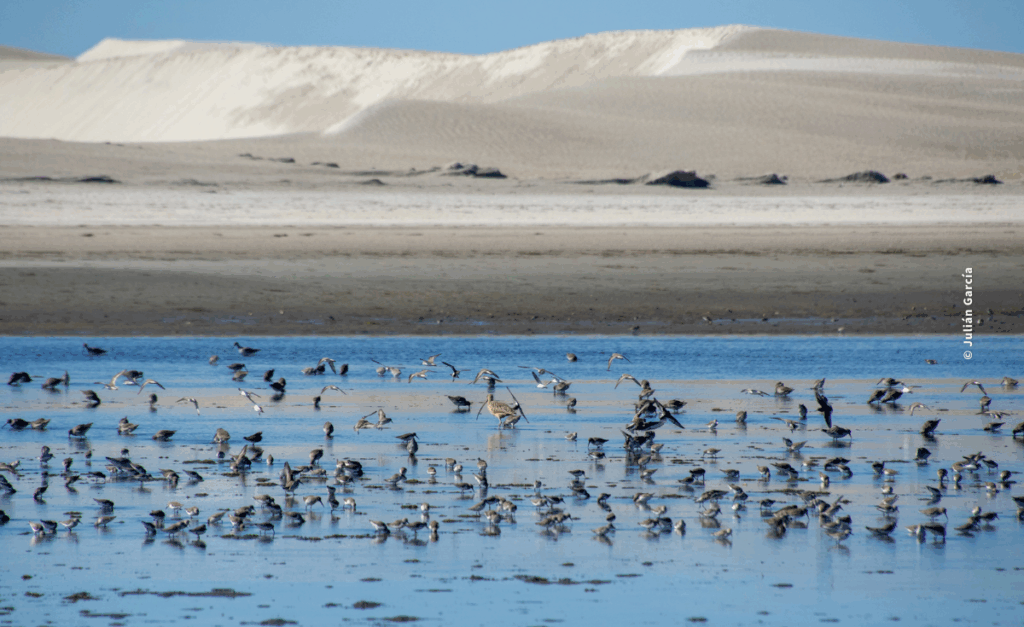
This loss will have direct consequences for biodiversity. In the country’s Northwest area, just 16 coastal wetlands unite about 1.5 millions of waterbirds from more than 70 species, a lot of them migratory and with decreasing population.
“In a scenery of 2050 where we might expect an increase of water of about 20-30 centimeters (7.87-11.81 in), if we take the birds' perspective it means that all their habitat will deeply transform in just a few decades”, he explained.
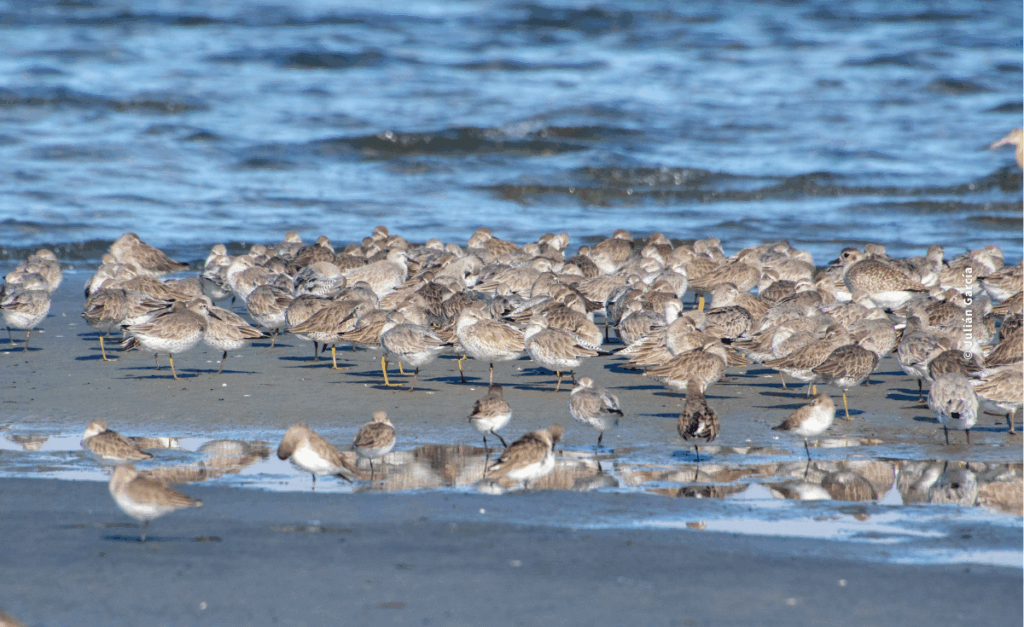
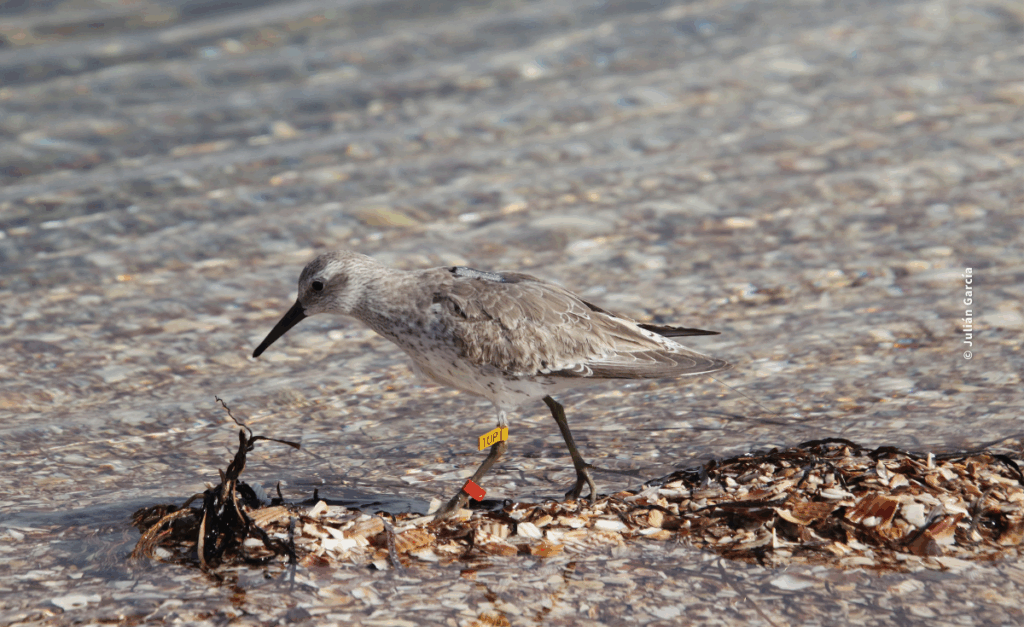
García Walther underlined that species as the red knot (Calidris canutus), that reproduces in Alaska and passes up to nine months in Mexican coasts; the loss of these ecosystems represents a direct threat to their survival.
In Laguna Guerrero Negro, B.C.S, Mexico, one of the most important wetlands for the red knot, the models point that by the end of the century it could get lost approximately half of their feed zones. If this pattern extrapolates to a dozen birds of similar size and use of habitat, these species might lose access to about 50% of its critical feed zones —mainly tidal flats— by the year 2050, he said.
An emergency call from science
Far beyond the loss of surface, García Walther underlined that it is very likely that birds face a reduction in available time to feed themselves much before the habitat gets lost completely. Because the sea level rise is a global phenomenon, this might act through all the coastal range of a species, affecting not only feed zones, but also rest zones and even reproduction zones. That’s why, he affirmed, it should be considered an existential threat for waterbirds.
From Pronatura Noroeste, we concord that this diagnosis is an emergency call to action. Protecting the wetlands, guaranteeing a space for them to adapt and add the sea level rise in the national strategies of climate change it’s fundamental to protect the routes of migratory birds that connect Mexico with the rest of the continent.
On this World Wetlands Day, scientific proof presented by Julián García Walther indicates that conserving these ecosystems is an urgent and strategic decision not just for waterbirds but also for coastal communities that live and rely on these habitats.
Adding sea level rise on the climatic planning, protecting the space wetlands needs to
adapt themselves and reinforce the scientific collaboration are indispensable steps to
guard Pacific migratory routes.
At Pronatura Noroeste we believe acting now it’s the only way to guarantee birds keep finding in our coasts the shelters its travel had been holding for generations. You can see the complete webinar here.
Translated by: Daleth Aguilar.
Reviewed and edited by: Perla Mendoza.