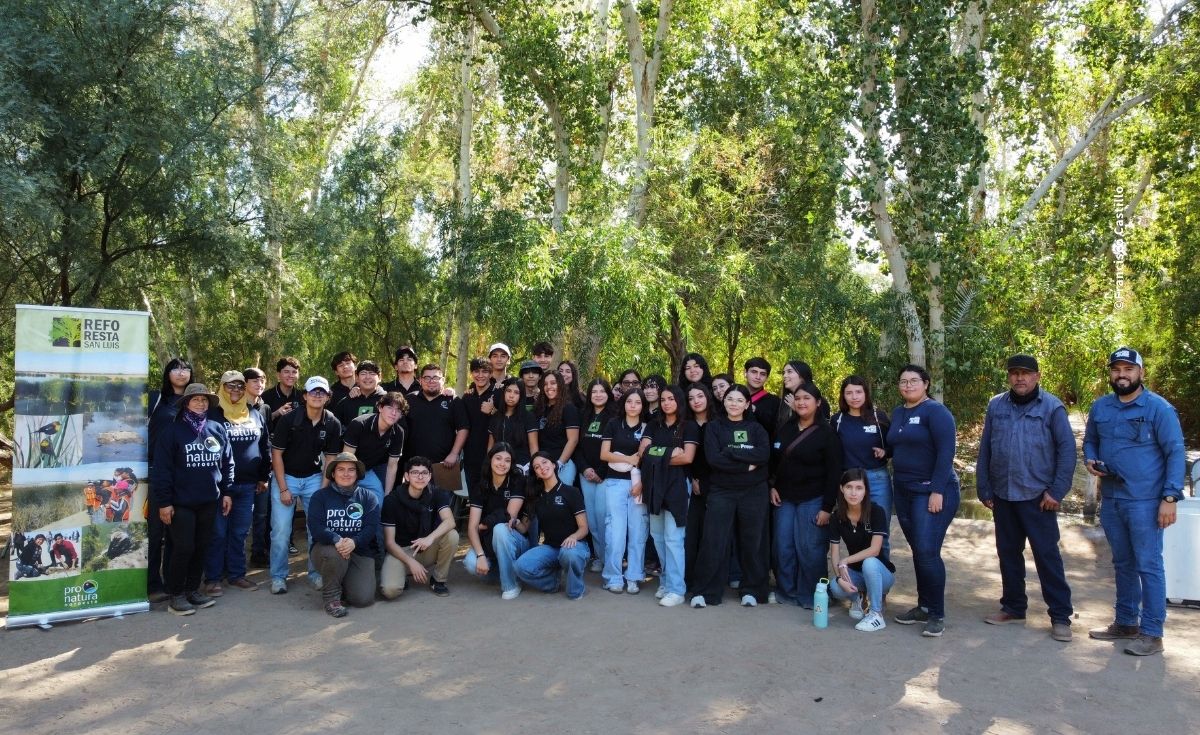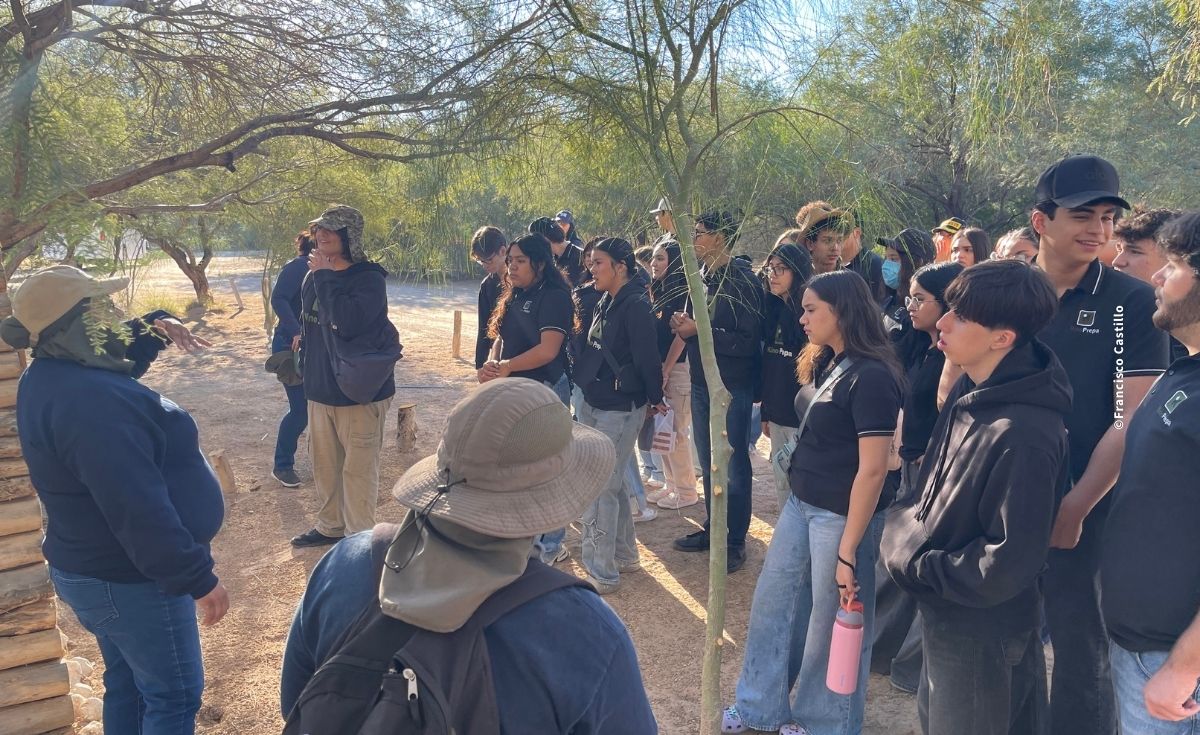


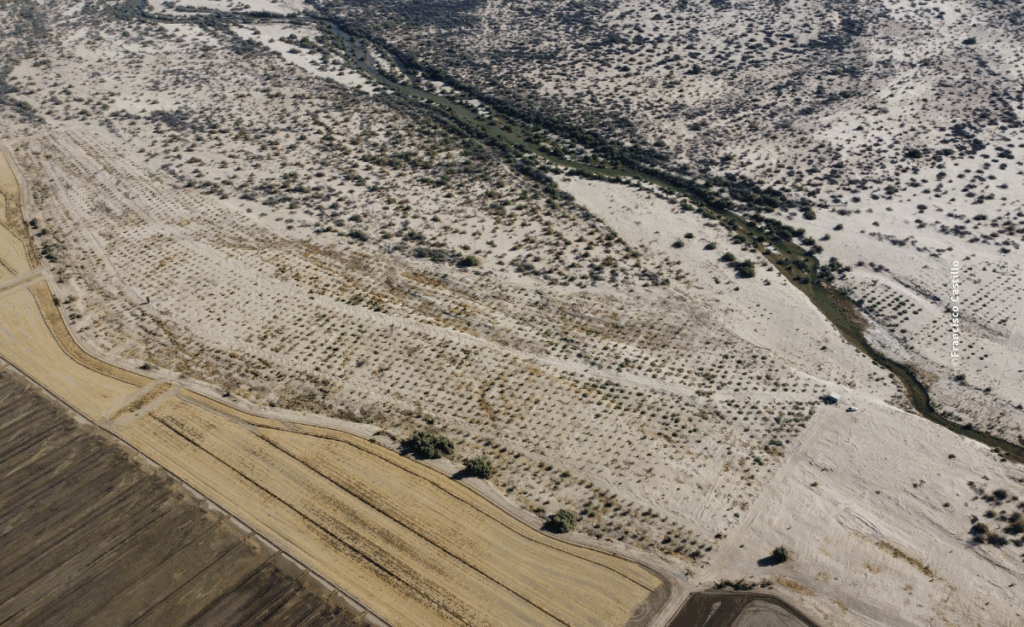
The site Miguel Alemán, formerly an arid area, has been transformed into a forest with 460 acres of land and more than 100 thousand native trees, all thanks to Pronatura Noroeste, who benefit the local biodiversity.
In Pronatura Noroeste we believe that the starting point for returning life to an ecosystem is the restoration of the soil. The site Miguel Alemán, in the Delta in Colorado River, is one of the prime examples on how consistent scientific and communitary work can transform a degraded soil into a forest that breathes again.
On World Soil Day, Francisco Castillo Tapia, a restoration technician in San Luis Río Colorado, remembered when the work started in Miguel Alemán in 2014, an area that was found with salinated and compacted soil, also invaded with species like salt cedar.
“We now count with a great advance in the restoration, we have restored 172 hectares [425 acres] of native habitat. Due to the lack of water in the river, permanent irrigation work and maintenance has been made”, he pointed out.
In the Delta, there are different types of habitat: poplar and willow forests, mesquite forest and high-terrance forest. The native species we work with also include several types of palo verde, besides mesquite and shrub, and other native bushes.
The ecological restoration begins in the soil
In Pronatura Noroeste, we are convinced that ecological restoration begins with healthy soils. That’s why, whenever we plan to intervene in a new site, we commission soil quality assessments and hydrological studies.
We oversee four stages in the restoration, which consist in:
- Polygon assessment, with soil quality assessments and hydrological studies included, and the restoration design.
- Land clearing of invasive species, which salt cedar (Tamarix ramosissima) predominates in the Delta of Colorado River;
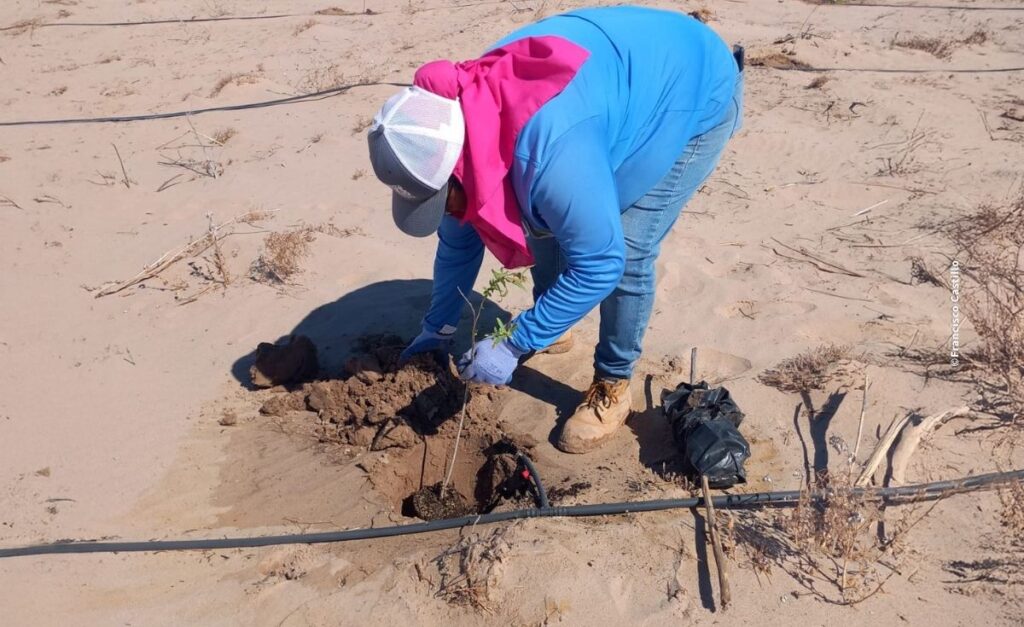
- Restoration, which includes installation work of irrigation systems for the reforestation.
- Biological monitoring, to evaluate and keep record of the restoration.
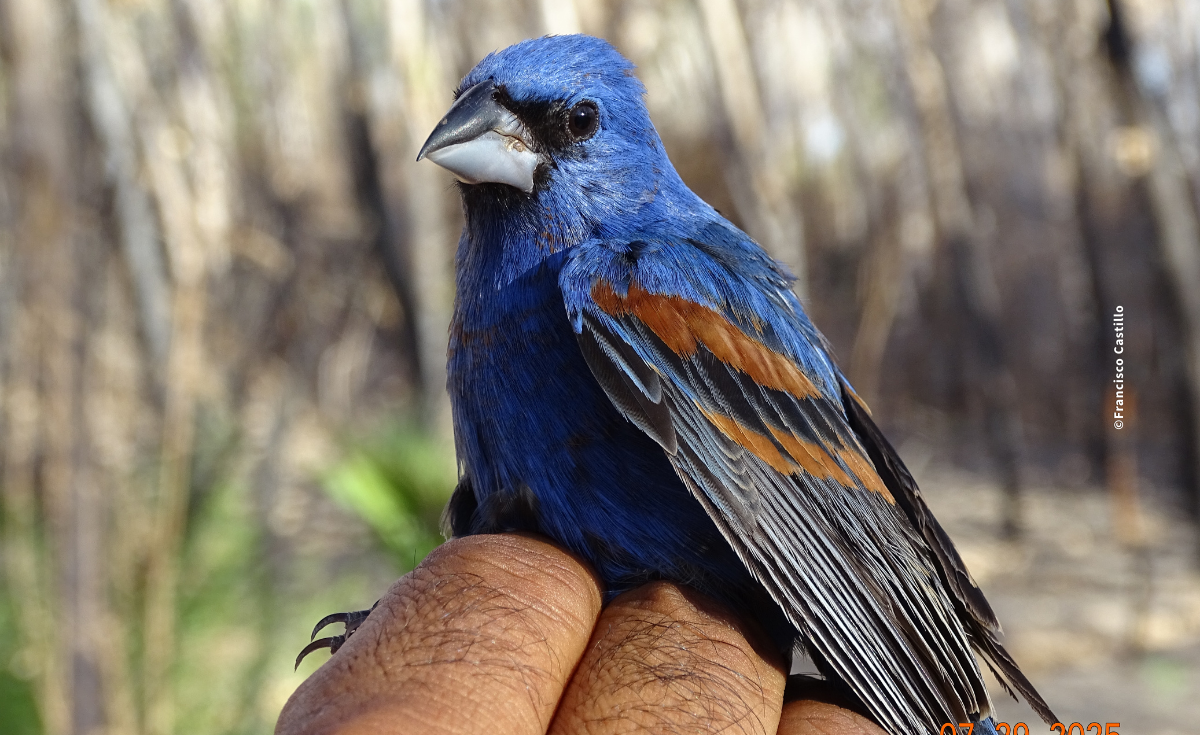
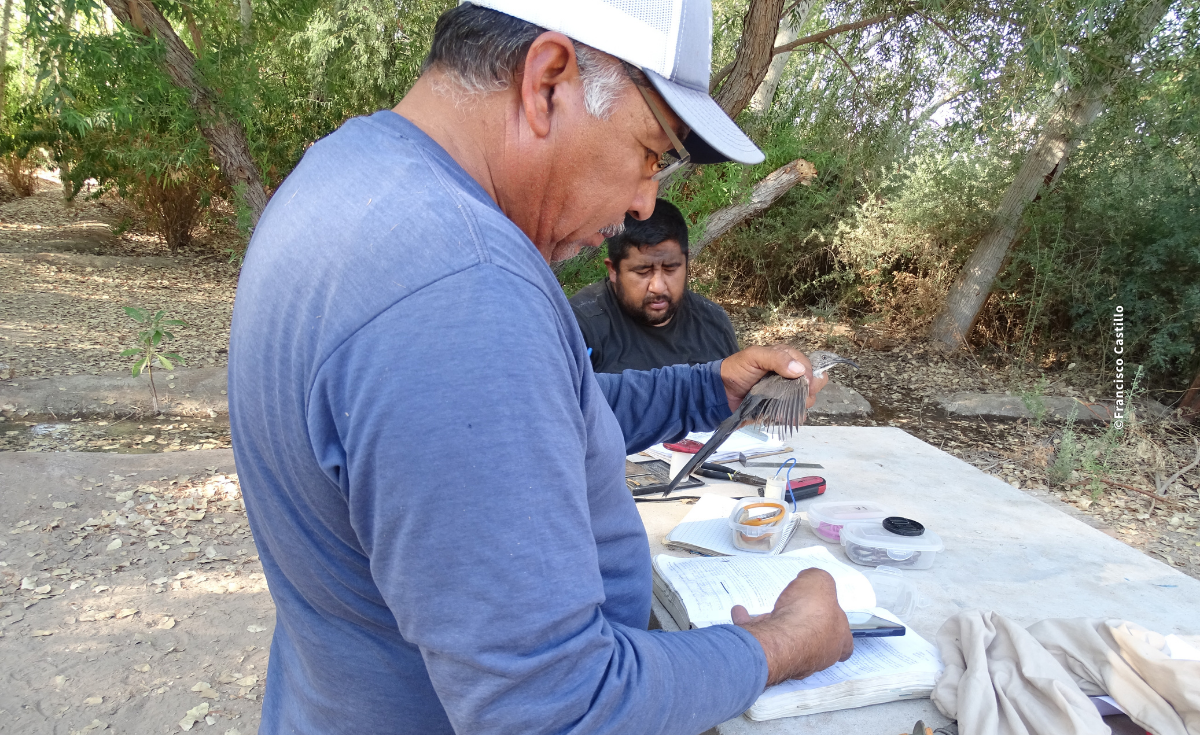
“In Miguel Alemán, the work started in 2014, it started with the first stage, with the making of the polygon assessment, soil monitoring, water monitoring, birds, to keep documenting how the restoration is turning successful,” Castillo Tapia remembered.
The restoration of the site is well advanced, our current work is monitoring the soil quality and the hydrology, in order to know the water quality that comes from the underground and have the certainty that the site is recovering.
Today, after years of work, we see a growing forest, with more than 100,000 native trees and a high level of biodiversity that indicates a responding ecosystem.
Community as a key element
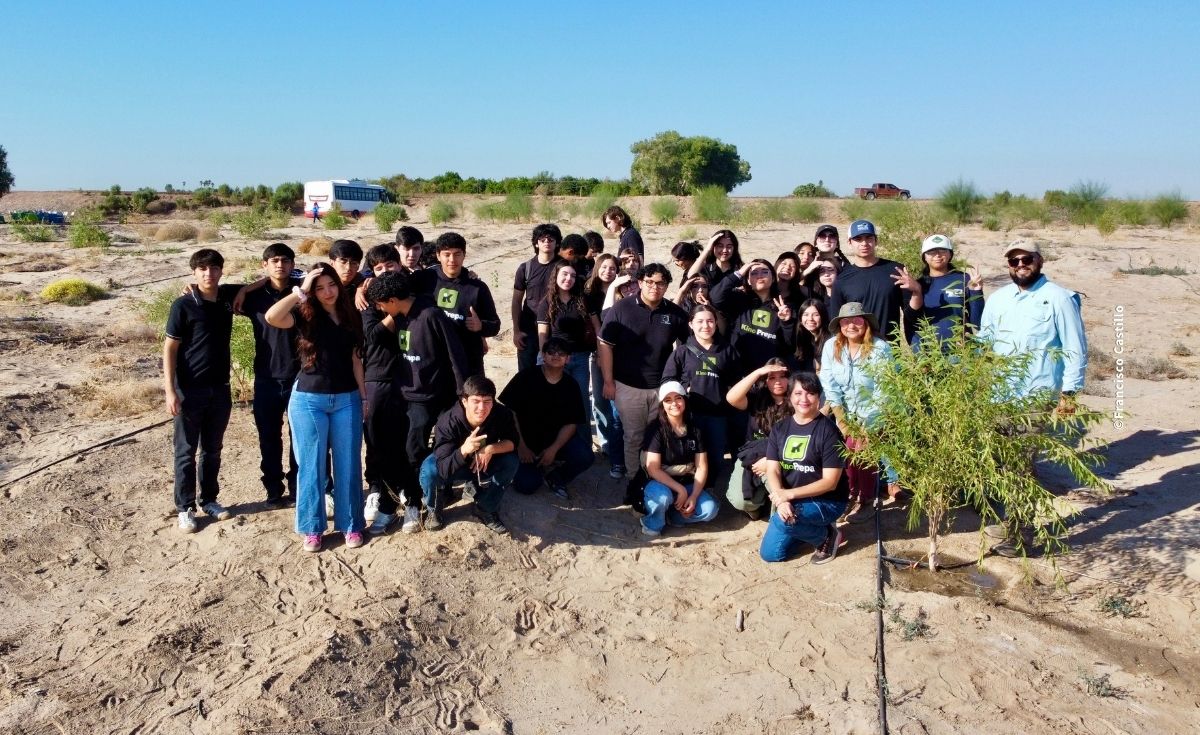
The restoration has also reinforced the community. The crews that work with us are formed by local people that have become guardians of the site.
“We’ve had a lot of benefits, especially because the crew we need for the creation of the new sites are from the same community, in fact, most of our colleagues live 5 minutes from the site,” Castillo Tapia pointed.
They don’t just watch the site, but they also teach their children to care for the site and care for the environment.
“In the same ejido there is a tiny school that benefits a lot, because the kids can go and learn right there on the site,” he said.
“The forest also belongs to them, because they watch it grow everyday,” points out Francisco.
On World Soil Day, this project reminds us that the restoration of the soil is the restoration of the life that depends on it. Every tree rooted to this land, every bird that comes back and every person involved shows that the recovery of the Delta in the Colorado River is not only possible, but is happening right now.
In Pronatura Noroeste, we’ll continue working to transform semi-arid sites like Miguel Alemán and other areas in Delta, as Janitzio, into living refuges, resilient and with a bright future. Because when the soil is reborn, everything else comes alive.
Translated, reviewed, and edited by: Belinda Carpio.