

Through spaces for dialogue, environmental education, and scientific dissemination, we share experiences built alongside coastal communities that demonstrate that ocean conservation is strengthened when people are part of the solutions.
Coastal communities, science, and collaboration were at the heart of our participation in the 2026 World Oceans Day Festival, organized by the National Commission of Natural Protected Areas (CONANP) at Chapultepec Forest in Mexico City.
Through spaces for dialogue, environmental education, and scientific dissemination, we share experiences that demonstrate how marine conservation is strengthened when people who live and depend on ecosystems become part of the solution. From sustainable fisheries to the conservation of key ecosystems, we brought stories and lessons learned alongside communities from northwest Mexico to the festival.
Community-Base Conservation and Sustainable Fisheries
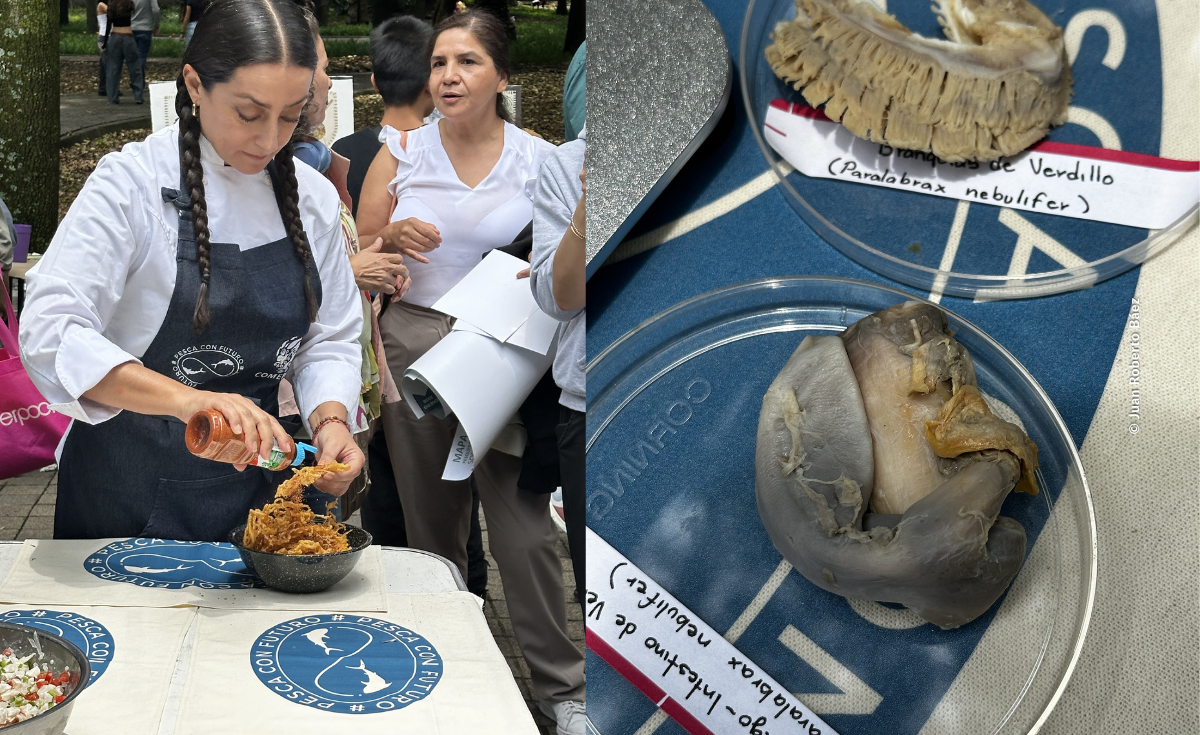
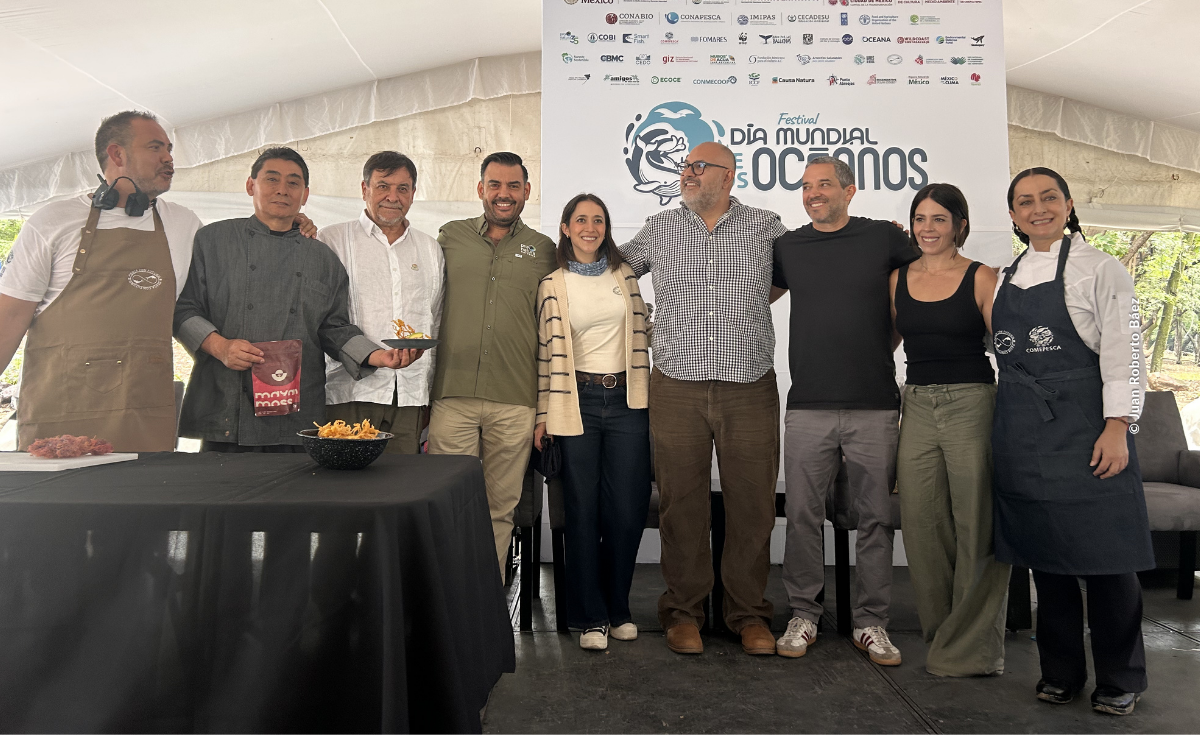
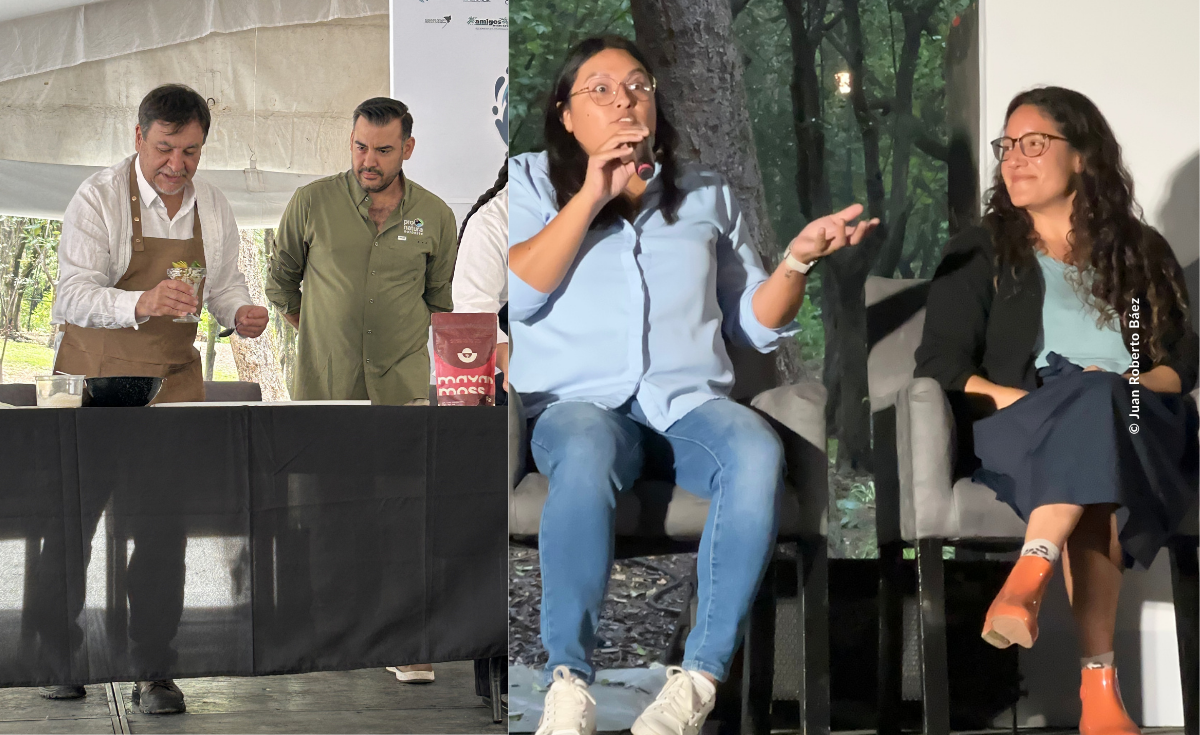
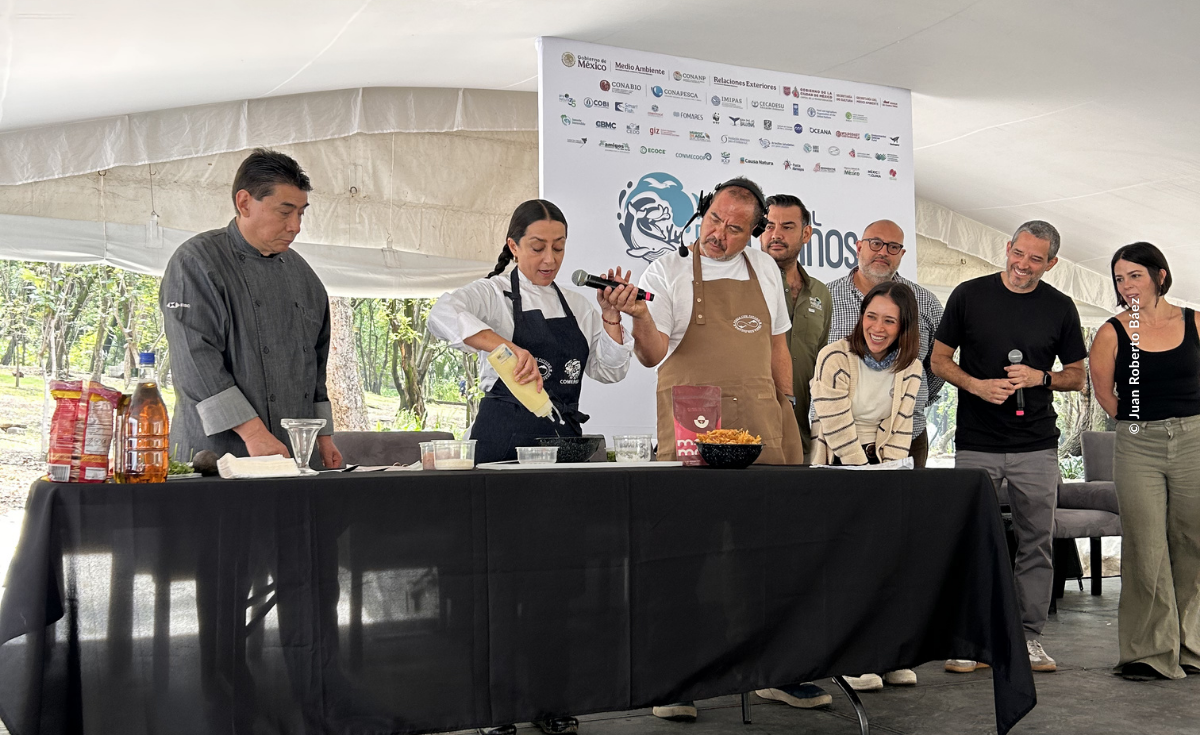
One of the most notable moments was our participation in a cooking show dedicated to fisheries sustainability and responsible seafood consumption, featuring barred sand bass (Paralabrax nebulifer) as the main species.
During the activity, we discussed the efforts being promoted by different stakeholders to strengthen sustainable value chains, promote seafood traceability, and create incentives that link markets with ocean conservation. We also shared experiences showing how organized fishing communities can contribute to the responsible management of marine resources and the well-being of their territories.
The event featured Dr. Pedro Álvarez-Icaza Longoria, National Commissioner of National Commission of Natural Protected Areas (CONANP), who highlighted the fisheries conservation and management efforts led by cooperatives of the Regional Federation of Fishing Industry Cooperatives of Baja California (FEDECOOP), particularly the Punta Abreojos Cooperative, as examples of community organization and sustainable use of marine resources.
The panel also included our collaborator Juan Roberto Báez; Eduardo Enríquez, Secretary of the Punta Abreojos Cooperative; Aline Molina from COMEPESCA, Javier Van Caewelart from SmartFish, and Paulina Zanela from Regenerative Ocean Project.
The conversation, led by Mexican chef Lula Martín del Campo and facilitated by Kim Ley Cooper of CONANP, helped connect the importance of sustainable fisheries with consumer choices and the future of the oceans.
The Upper Gulf of California and the Strength of Local Voices
The voices of fishing communities also played a central role in our participation.
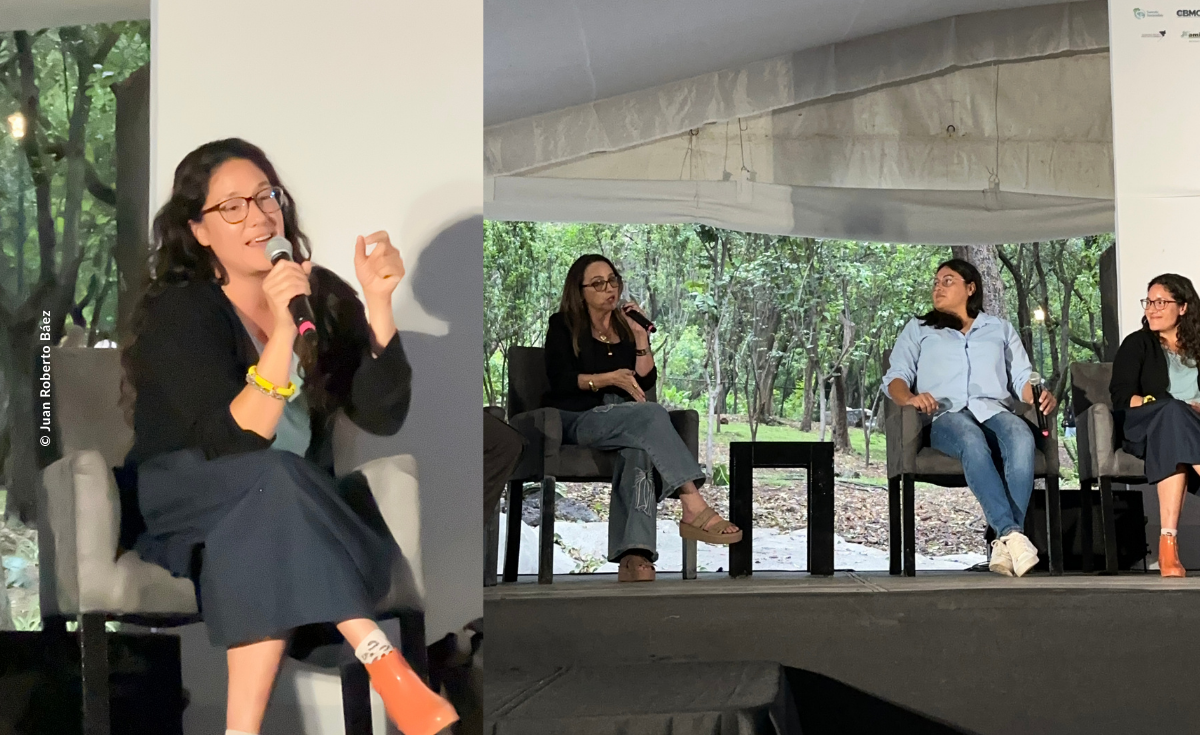
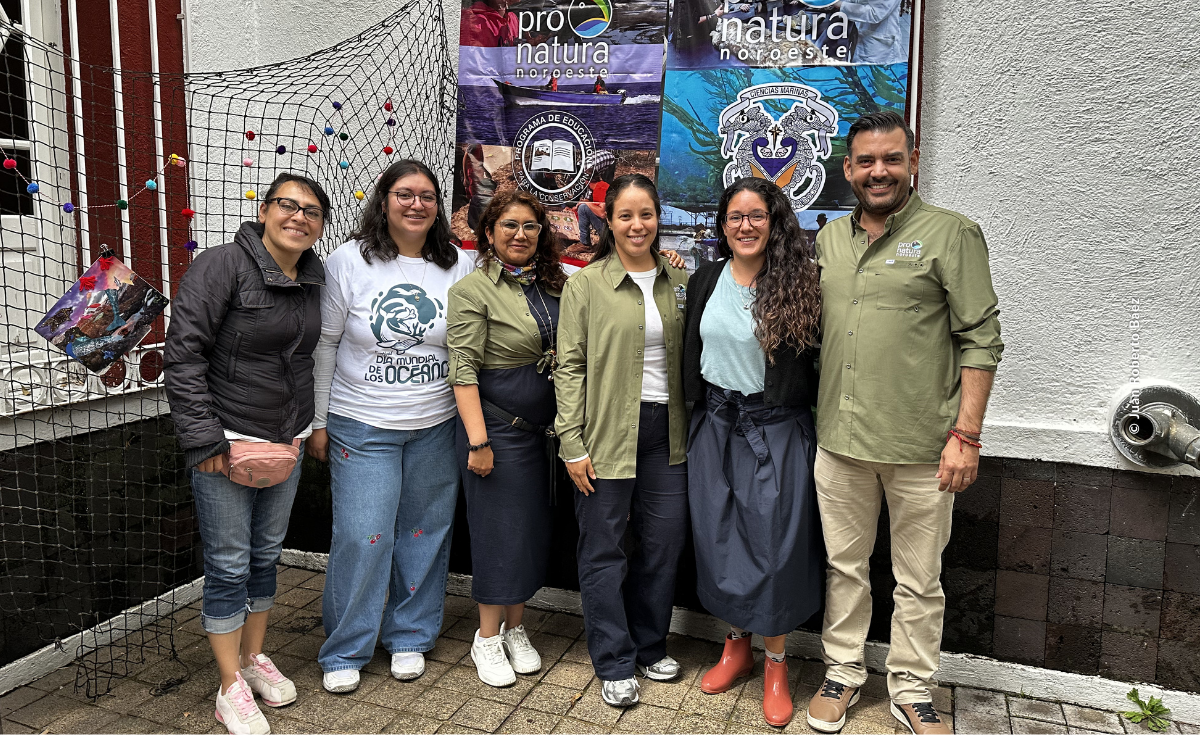
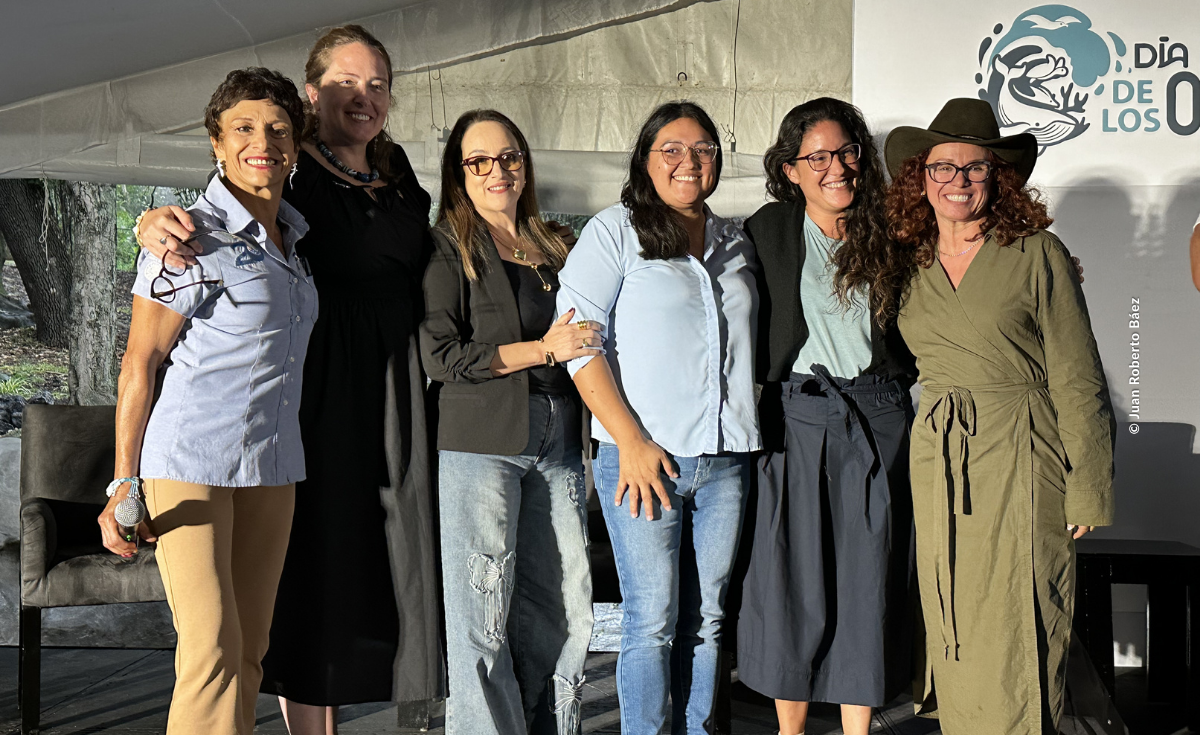
In a panel dedicated to the Upper Gulf of California, our Conservation Director, Valeria Towns Alonso, joined Nélida Barajas, Executive Director of CEDO Intercultural, and Laura Martínez, Executive Director of Niparajá, to discuss the social and environmental challenges facing this region and the need to build solutions that integrate conservation with the well-being of those who inhabit these territories.
One of the most meaningful moments occurred when Anabel Espinoza Higuera, from San Felipe, Baja California; and Imelda Acosta Ciprián, from Golfo de Santa Clara, Sonora, called for strengthening the direct participation of communities in the spaces where decisions about the future of the region are discussed and made.
Their message reminded us that conservation is most effective when it incorporates the knowledge, experience, and perspectives of those who live daily with the challenges and opportunities associated with fisheries and ecosystem care.
Bringing Kelp Forests to the Public
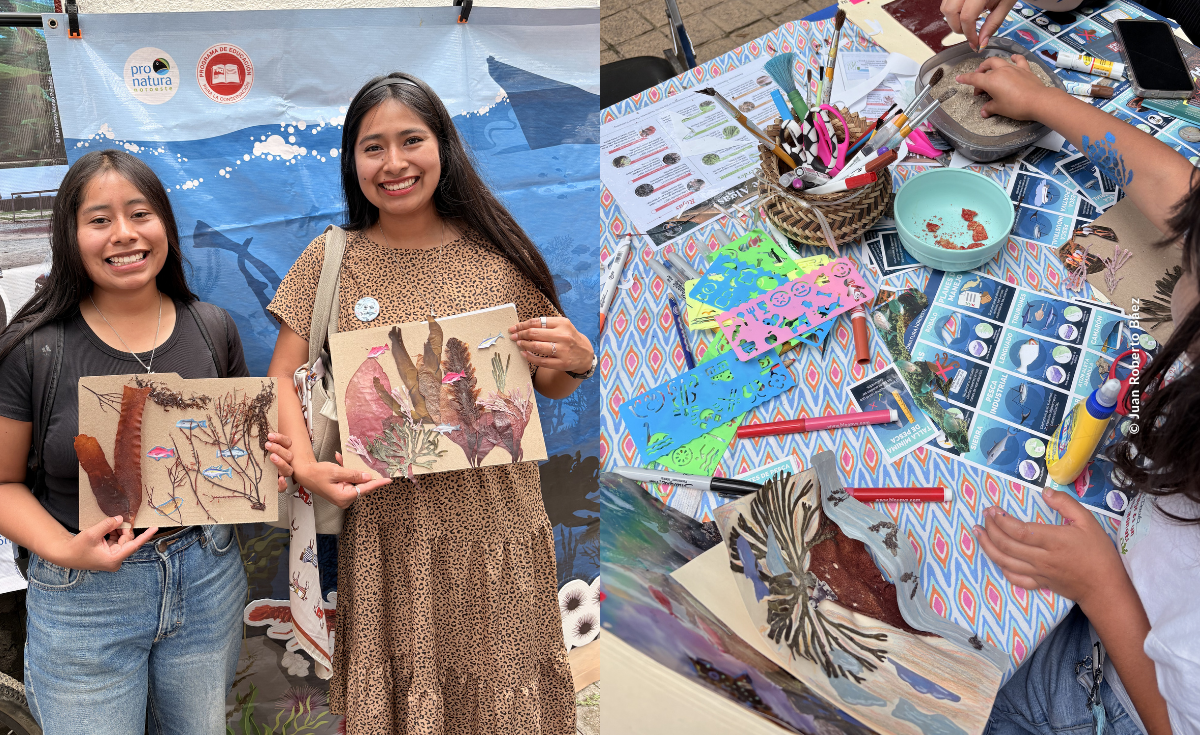
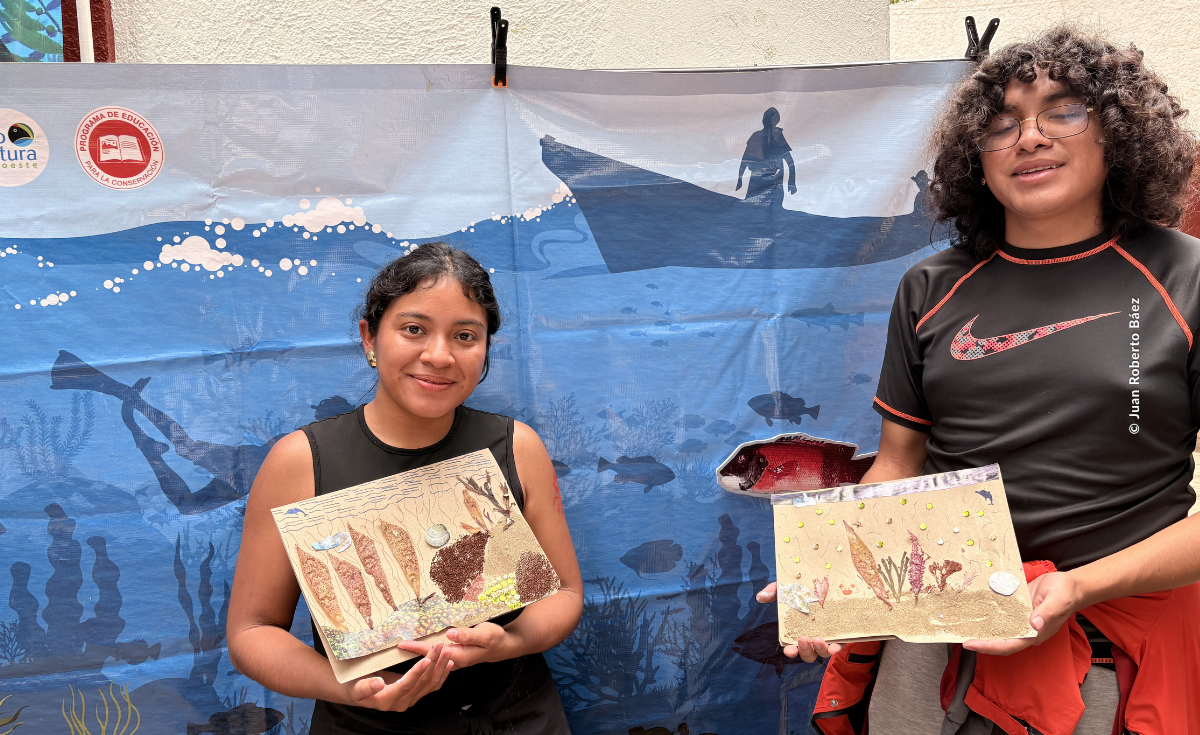
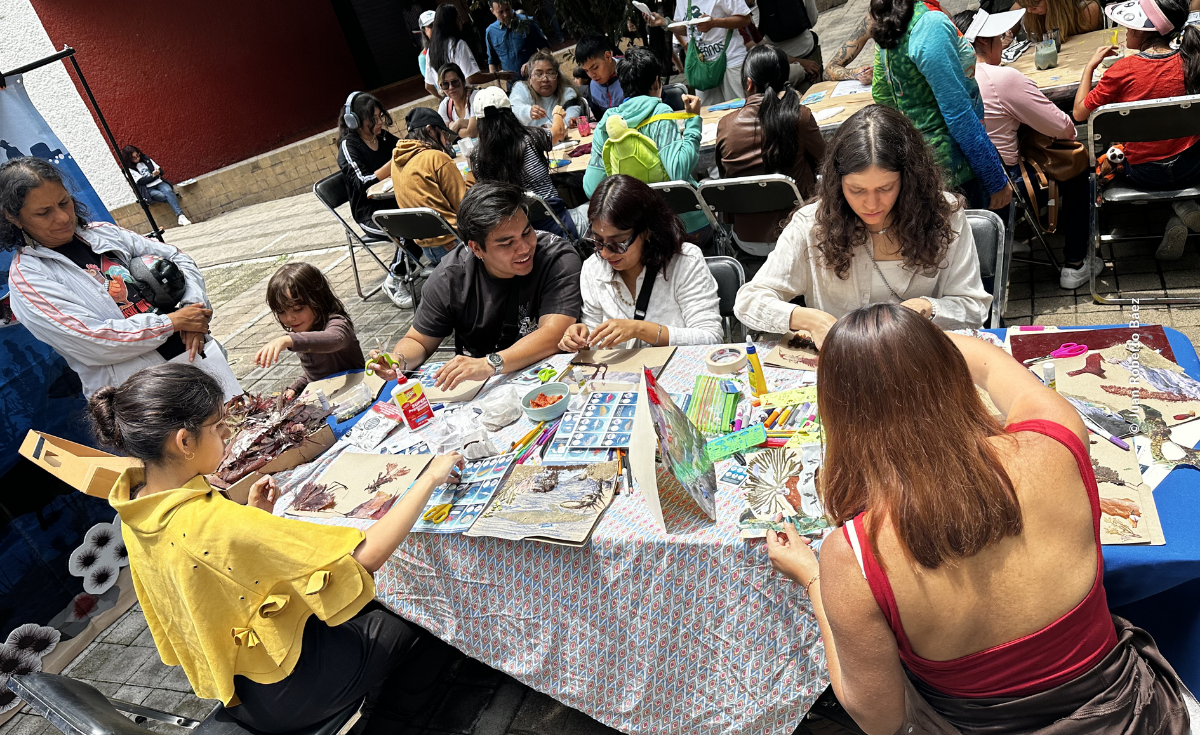
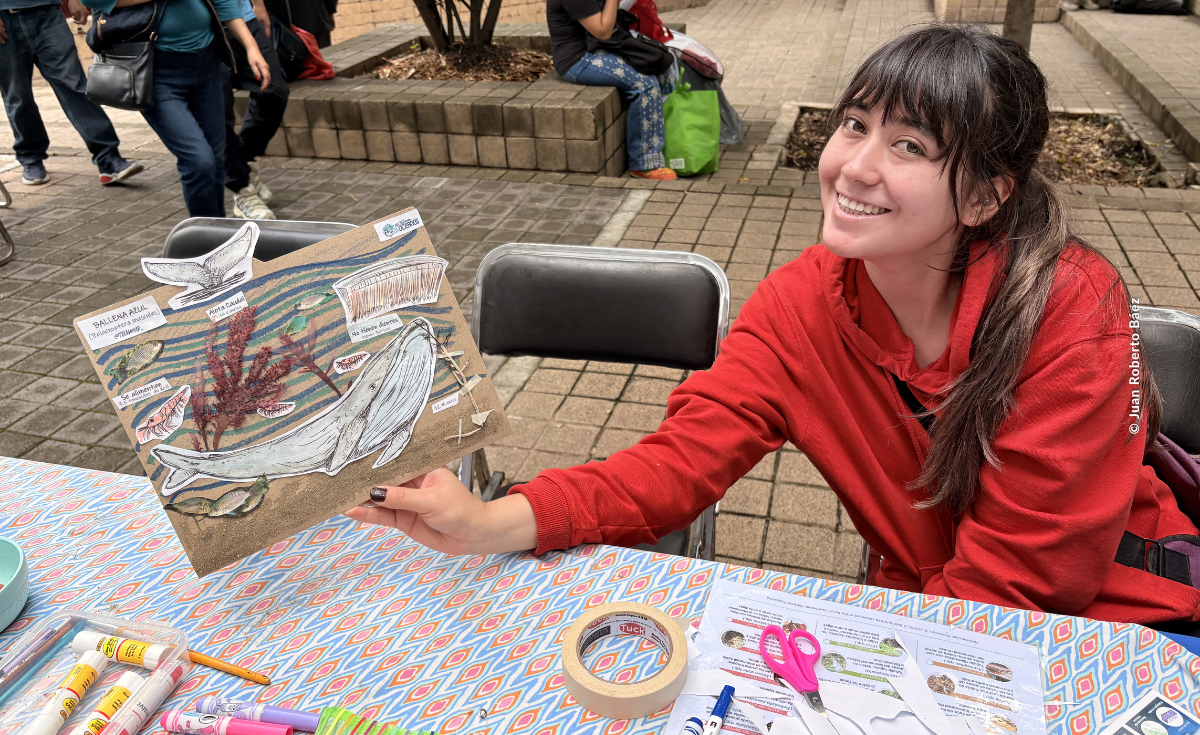
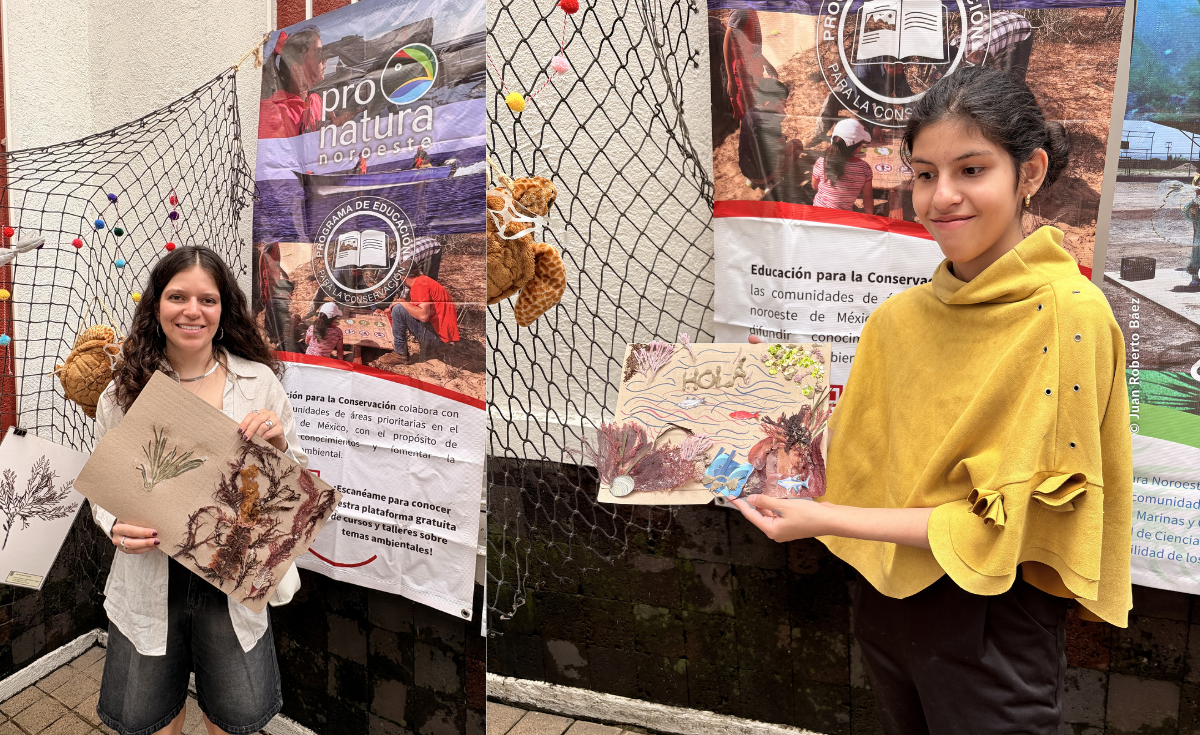
As part of the festival’s educational activities, we presented the “Baja California Macroalgae Immersion” stand, coordinated by our Conservation Education Coordinator Lizz González Moreno, in collaboration with the Faculty of Marine Sciences of the Autonomous University of Baja California.
Through sensory and interactive experiences, more than 200 people learned about the diversity and ecological importance of marine macroalgae, ecosystems known as the Pacific kelp forests, which are fundamental to biodiversity, marine productivity and the livelihoods supported by fisheries.
The activity was attended by staff from SEMARNAT and CECADESU, elementary and university educators, as well as students and collaborators from institutions such as UNAM, IBERO, and Fine Arts.
This stand also allowed us to raise awareness among the public about the main conservation challenges facing these ecosystems, strengthening the connection between scientific knowledge, environmental education, and citizen participation.
Conservation Built Through Multiple Voices
Our participation in the World Oceans Day Festival reaffirmed something we have learned through years of work in the region: conservation is only possible when it is built collectively.
Through these three spaces, we helped highlight experiences demonstrating that ocean conservation requires not only technical and scientific knowledge, but also the active participation of coastal communities, collaboration across sectors, and an increasingly aware citizenry of the role oceans play in our collective well-being.
Translated by: Nicole Fuentes & Daniella Zatarain
Reviewed and edited by: Grecia Martínez