

At Pronatura Noroeste, together with the Interdisciplinary Center for Marine Sciences (Cicimar) y Fishing Data, we train onboard observers of the Mexican Pacific small pelagic fleet to protect sea turtles and move advance more sustainable fisheries.
Through this training process, we strengthen technical capacities that help reduce bycatch, generate scientific information, and reinforce traceability in fisheries.
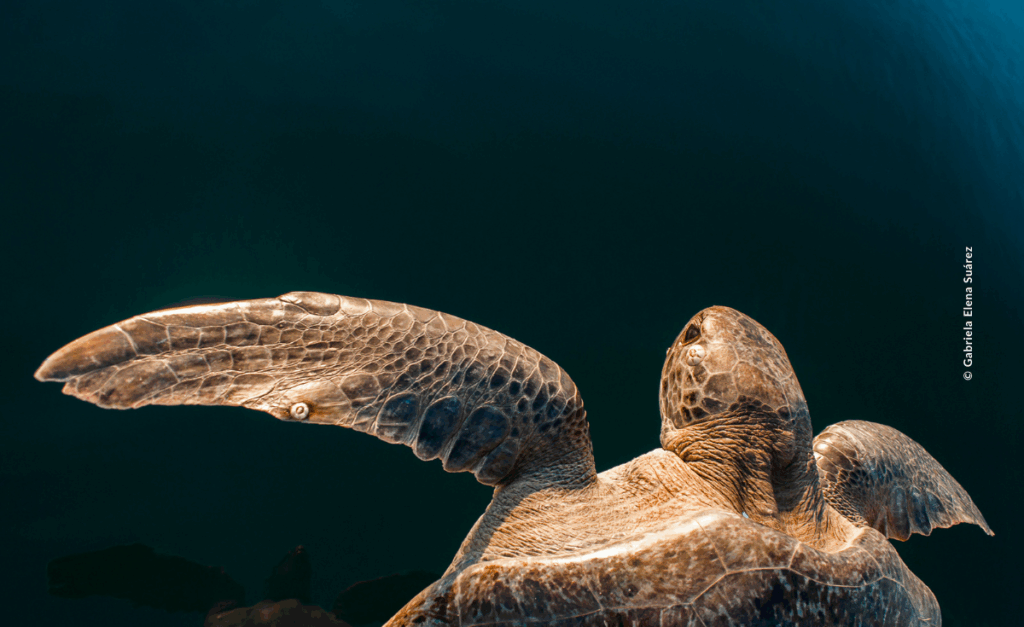
Sea Turtle Protection Through Fisheries
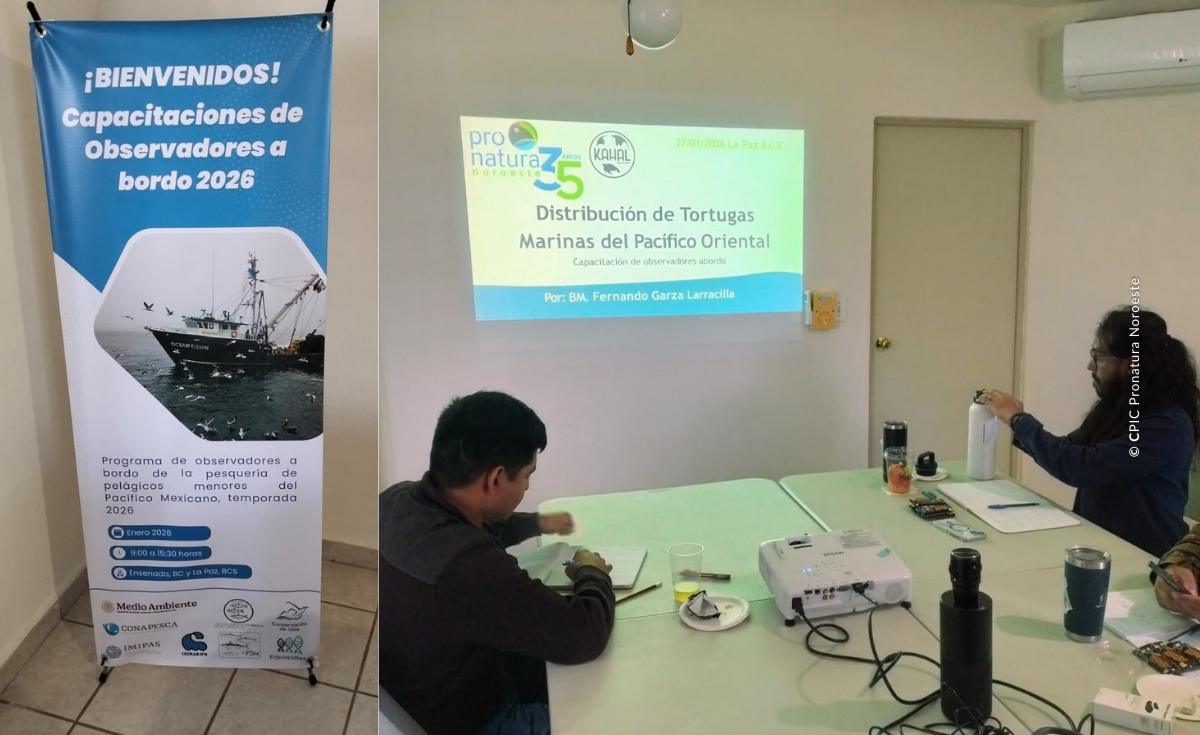
Through our Environmental Education field technician, marine biologist Fernando Garza Larracilla, we contribute to training in sea turtle identification, aimed at fishers and observers from communities in the Gulf of Ulloa, Bahia Magdalena, and other areas of the Pacific.
“This training covers different topics: fishing, marine mammals, seabirds, and I was responsible for the sea turtle identification part,” he explained.
During the training session, he shared information about the issue of bycatch and the tools needed to correctly identify species when they interact with fishing nets.
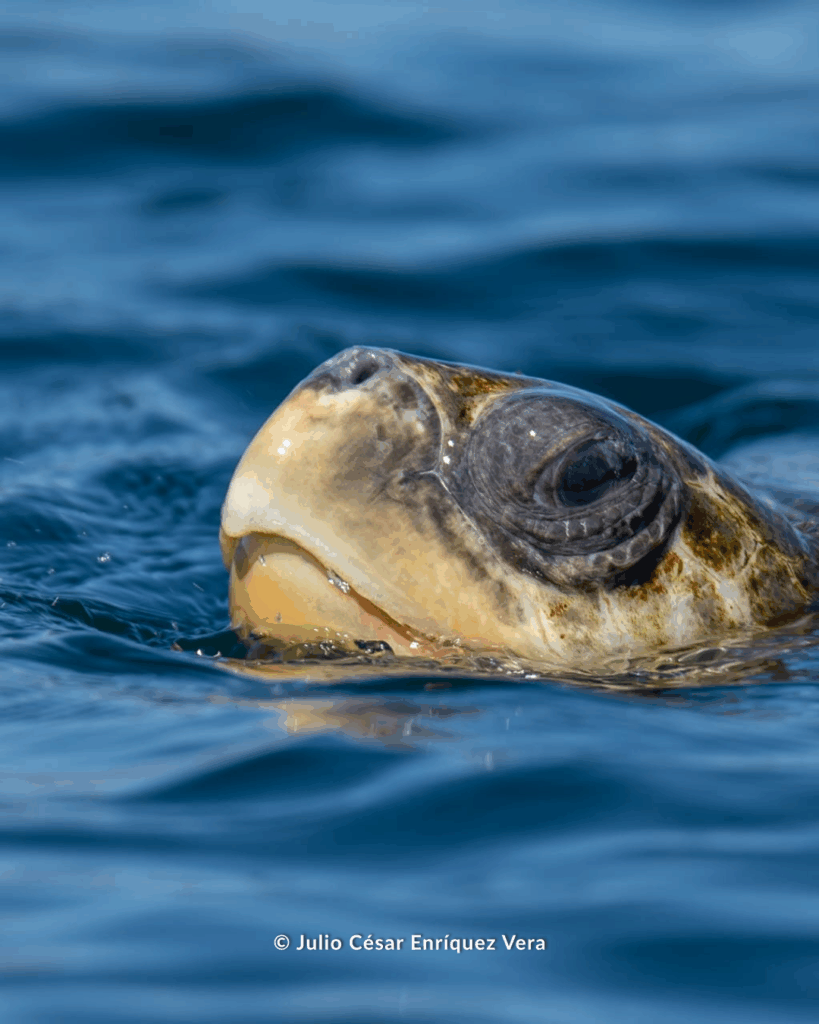
“Many fishing areas overlap with feeding areas or migratory routes of sea turtles, mainly the East Pacific green turtle (Chelonia mydas agassizii) and the loggerhead turtle (Caretta caretta),” he explained.
Scientific Data a Key Element for Conservation
The training included tools for logging morphometric and morphological data, essential for research and conservation.
“The goal is for them to know what data they can collect: whether it is a male or female, whether it has metal tags on its flippers, and what to do in those cases. We also cover some clinical techniques if the turtle is found in poor condition in cases of bycatch,” he said.
Garza Larracilla emphasized that this type of training allows for a better understanding of fishing strategies and helps prioritize key areas for the conservation of emblematic species.
He also highlighted that this strengthens the generation of scientific information on sea turtles, transoceanic migratory species whose protection depends on monitoring nesting and feeding areas. Different species and sizes converge in these sites, making their presence an indicator of the health of marine ecosystems.
“We want participants to truly understand the species they are interacting with. Of the seven marine turtle species that exist, five are found in Baja California Sur and are often not identified correctly. In addition, six are under some level of threat,” he noted.
He added that little is still known about species such as the leatherback sea turtle, making any logged data valuable for its conservation.
Training Promotes Sustainable Fishing
Fernando Garza emphasized that these training sessions promote the protection of different marine species and responsible fishing practices, adding value to this activity.
“These training sessions for onboard observers help generate knowledge that allows them to understand sustainability in fisheries and how certain conservation strategies can help create a positive impact for present and future generations,” Garza Larracilla noted.
We thank Dr. Pablo Mora Zamacona, coordinator of the Species on Board Program at Fishing Data, for facilitating the implementation of this workshop. Today more than ever, it is essential to join efforts to protect biodiversity and secure the future of our oceans. Support sustainable fishing, stay informed, and promote actions that help protect the ocean and the species that inhabit it.
Translated by: Edgar Bolaños and Oddary Tacuba.
Reviewed and edited by: Grecia Martínez.