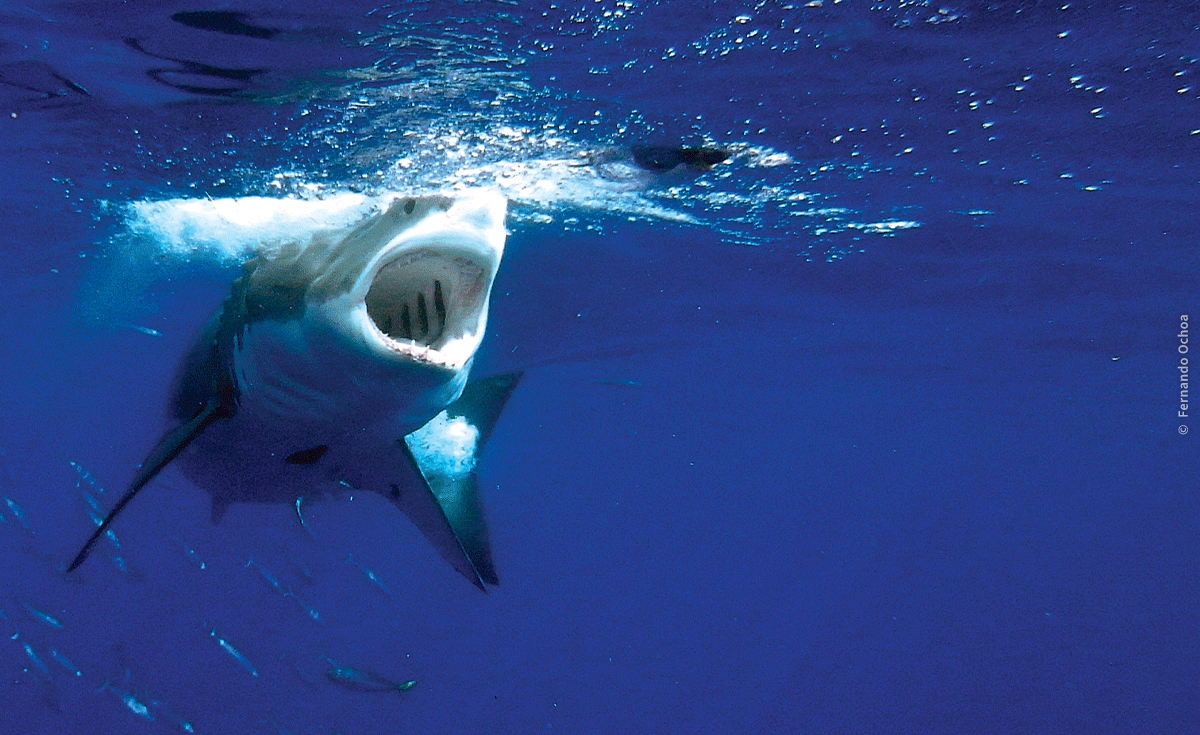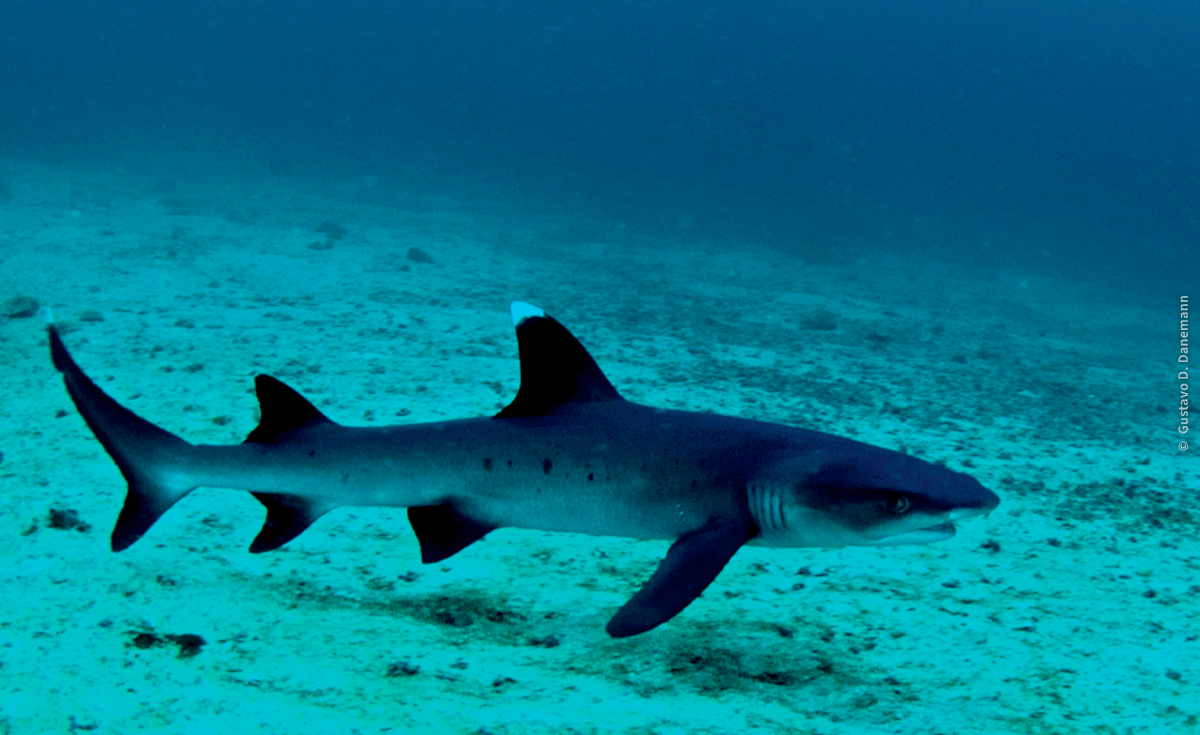


The role of sharks in nature is far removed from the stigmas left by movies and pirate stories. Sharks are a vital species, necessary to achieve ecological balance as natural regulators and guardians of ocean health.
In the Gulf of California, one of the richest marine ecosystems on the planet, sharks are fighting a silent battle for their survival.
Although often seen as feared predators, their true role in the ocean is far more important: they regulate ecological balance and safeguard marine health.
Every July 14th, International Shark Awareness Day is commemorated, making it a crucial moment to remember that 11 priority shark species inhabit the Gulf of California and are in urgent need of protection. The reason? Harmful fishing gear has been used in coastal fisheries for more than a century. The pressure on their populations has been so severe that many are now at critical risk.
This region is not only a jewel of biodiversity, it is also one of the seven marine “hotspots” in the world where neritic and pelagic sharks face the greatest threats.
Species such as the scalloped hammerhead shark (Sphyrna lewini) or the pelagic thresher shark (Alopias pelagicus) are not only victims of the fin trade, but also of the lack of control over fishing areas.
Although Mexico is the third largest shark producer worldwide, no specific fishing refuges have been designed to protect them. However, some regions in the southern Gulf have proven to be critical: they host the highest diversity of species and could become strategic zones for their conservation.
It is essential to identify the sites where they live, safeguard their habitats, and regulate fishing with a territorial approach. Sharks are a species we need to maintain ecological balance-one that benefits us all.
Revillagigedo Islands: A Safe Sanctuary
Another place where sharks can be found in the Pacific Ocean is the Revillagigedo Islands, southwest of the Peninsula of Baja California. It’s a true oceanic sanctuary for the species.
At Pronatura Noroeste, we work to conserve this place, which was declared a National Park in 2017 and was also previously proclaimed a RAMSAR Site due to its international ecological importance.
This region serves as an aggregation area for species like the Hammerhead shark and the Silky shark. These species use these waters for food, migration and even reproduction.
The geographic isolation and the fishing ban in the National Park of Revillagigedo turn these islands into one of the few safe sanctuaries for highly migratory sharks in the Eastern Pacific.
In this place, scientists have documented transboundary movements that connect this area to other important ecosystems, like the Gulf of California and the Central American coasts.
Here are 10 interesting facts about sharks that you should know:
- 1. They are long-lived: some sharks can live up to 400 years.
On average, sharks live less than 23 years, although some species like Galeorhinus galeus can live up to 60 years or even 400 years like the species Somniosus microcephalus.
- 2. They are highly vulnerable.
They grow relatively slow, have late sexual maturity and a few offspring per litter. Also, they have low natural mortality, making their recovery after overfishing difficult.
- 3. There are at least 46 species in the Gulf of California.
More than 30 species are commercially exploited, many through opportunistic and multi-species practices.
- 4. Mexico is the world’s third largest producer of sharks.
Contributes 4.6% of global catch; only in the Gulf of California it represents more than 36% of national production.
- 5. There are 11 priority species in the Gulf of California for conservation. Between them are: Alopias pelagicus, Carcharhinus falciformis, Sphyrna lewini, and Isurus oxyrinchus, due to its high vulnerability and economic value.
- 6. There are key regions with high shark diversity.
The Fishing Operation Regions (known by its Spanish acronym, ROP) 1 and 7, shelter 10 of 11 priority species on the South and North of the Gulf.
- 7. Shark fishing in the Gulf has existed for more than 100 years. It goes back to the XIX century, but it was increased in the mid- 20th century with the international demand of meat and fins.
- 8. There are “fishing refuge areas,” but not for sharks.
Even though these areas help to reduce mortality and maintain the conservation of habitats, none of these areas was created for the protection of sharks.
- 9. Some species show loyalty to the area.
It has been observed that several sharks return to the same areas for reproduction, which allows to take region-specific conservation measures.
- 10. The Gulf of California is a global marine hotspot.
It is one of the seven regions of the world where the Neritic sharks (sharks that inhabit at less than 200 meters deep) and Pelagic sharks are more threatened and is also one of the most biodiverse areas.
Translated by: Belinda Carpio & Airam Norzagaray
Reviewed and edited by: Itzel Romero & Elizabeth López