

Pronatura Noroeste, along with Isla Isabel Marine Zone National Park, CONANP (Mexican National Commission of Protected Natural Areas), Seacology, and researchers from the Universidad Autónoma de Nayarit, join forces towards coral reefs restoration, which marine life and carbon capture depend on.
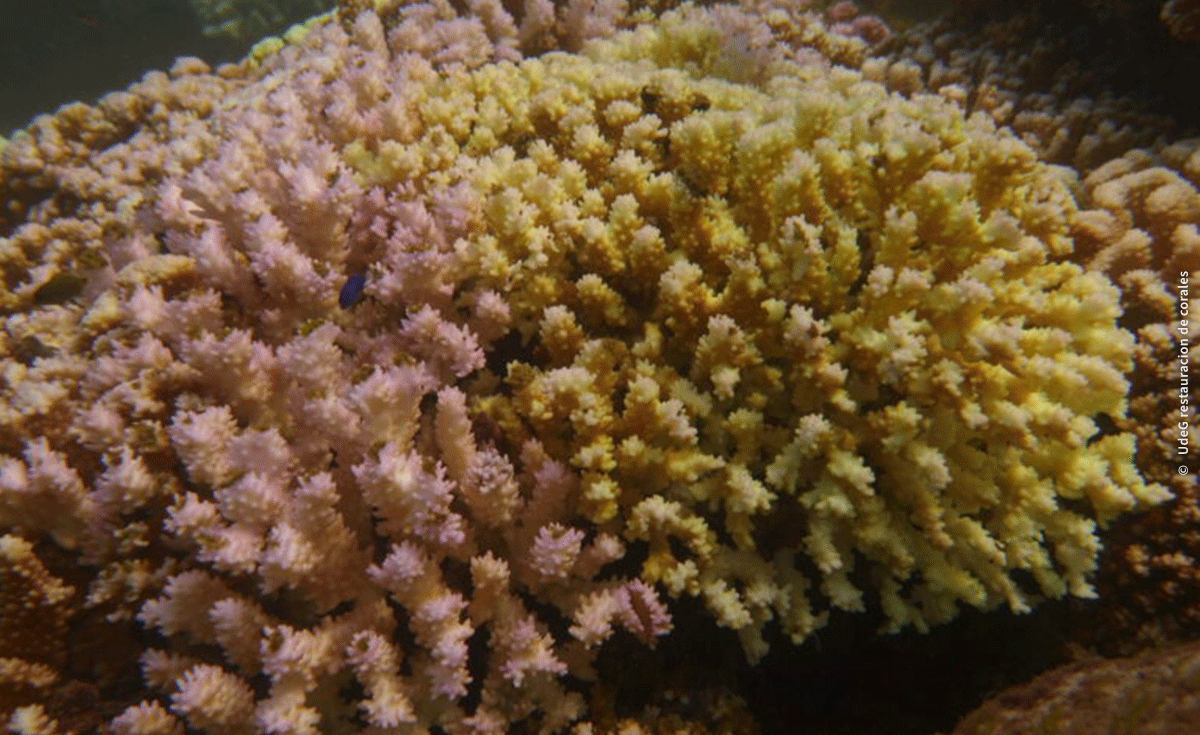
Do you know what happens when corals turn white? That’s one of the most alarming
signs the ocean sends us.
If a coral bleaches, it means it is at risk of dying, and its death means losing the
home of various marine species living within its reef. And that’s only one of the
consequences. That’s why on World Oceans Day, Pronatura Noroeste keeps you up
to date on the current situation of coral reefs in Isla Isabel Marine Zone National Park
and their relevance to the Pacific Ocean’s health.
Coral bleaching recorded at Isla Isabel Marine Zone National Park
When ocean temperature increases, corals lose a micro-algae called zooxanthellae (Symbiodinium spp.). These microalgae live within coral’s tissue, act as a food source, and give corals their characteristic color.
Therefore, with temperatures increasing, these animals die. Since the ideal temperature range for corals’ development is from 23°C to 29°C.
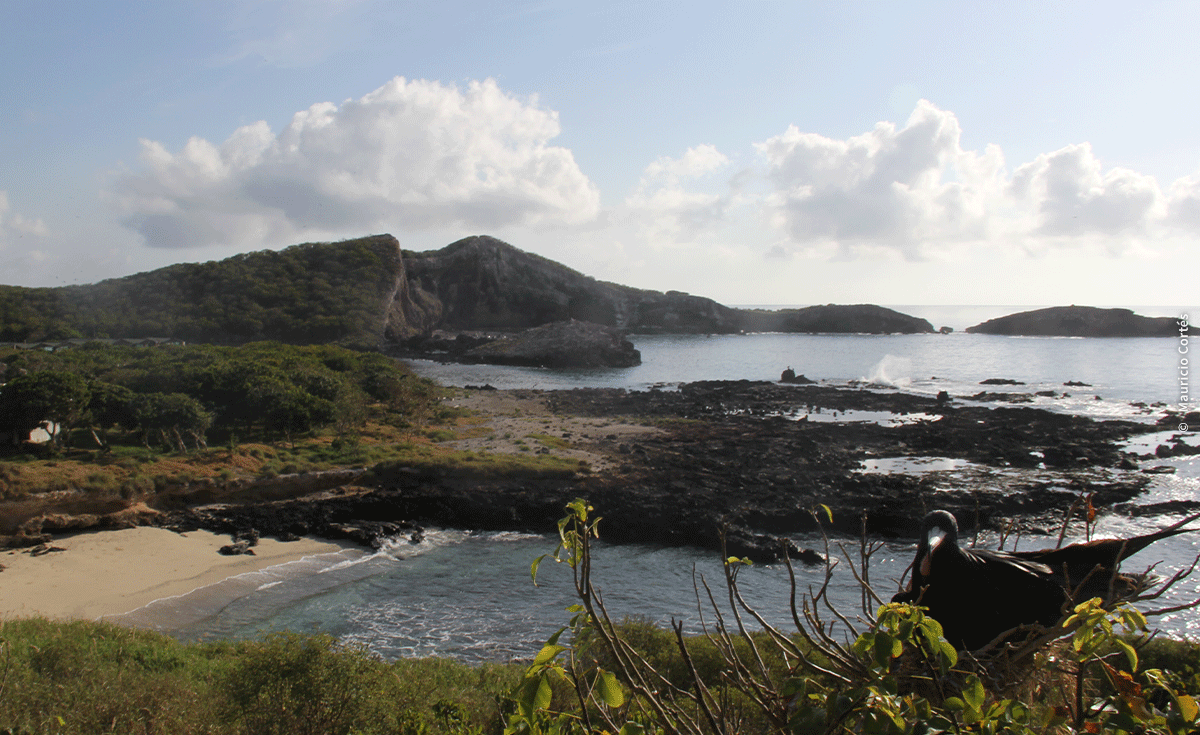
Coral bleaching has been recorded in Isla Isabel Marine Zone National Park (PNZMII, for its acronym in Spanish.)
According to NASA satellite monitoring, the Mexican Pacific’s temperature increased up to 2 degrees Celsius due to the El Niño phenomenon in 2023.
That behavior seen in the sea is a direct result of climate change, devastatingly impacting ecosystems.
Amílcar Levi Cupul Magaña, professor and researcher at the Centro Universitario de Ciencias Biológicas y Agropecuarias (CUCBA), has reported that, in Isla Isabel Marine Zone National Park, ocean warming left great damage, with 80 percent of coral bleaching, whereas in Islas Marietas, a damage of 93 percent was detected.
These are the coral restoration works
Pronatura Noroeste, along with Isla Isabel Marine Zone National Park, CONANP (Mexican National Commission of Protected Natural Areas), Seacology, and researchers from the Universidad Autónoma de Nayarit, join forces towards coral reefs restoration.
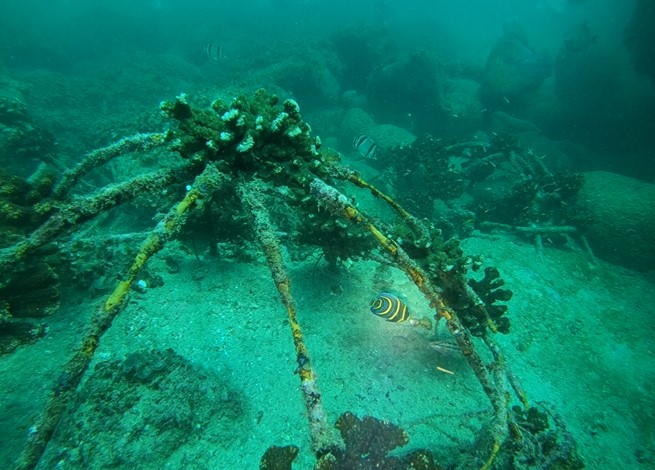
We installed 16 domes with 17 coral fragments on each one.
Domes are artificial structures used to help create new coral reefs, to create healthy colonies that restore the place.
Five bed nurseries were also installed on the seafloor at a depth of 16 meters. With 170 coral fragments placed in each bed nursery.
In total, 1,100 coral fragments were placed in the region’s seafloor, and by December 2024, it was found that 92 percent of these had survived and showed good signs of growth.
Why do we protect corals?
Corals are marine animals inhabited by a microalgae called zooxanthellae, which releases a calcareous structure that forms reefs and is part of the phylum Cnidaria. They can create colonies which other species inhabit.
It is estimated that 25 percent of the world’s marine species inhabit coral reefs.
Its role is crucial for ecosystem balance in oceans; corals capture the carbon produced in the sea, and due to their role as habitats, they’re essential for fish production and tourism.
These marine species also serve as a natural barrier that reduces impact of both storms and erosion.
Healthy corals play a fundamental role in oceans; that’s why we must dedicate important efforts to their conservation.
Translated by: Mayela Navarrete
Reviewed and edited by: G. Rubio León